
A search for egg freezing in Dubai brings up plenty of detail about the cycle and the cost, but far less about what happens once the eggs are frozen. That gap matters, as the retrieval day is only the first step in a long timeline. The eggs may stay in storage for years, and the decision to use them can come at a point in life that looks quite different from the day they were collected. Knowing what happens during that wait helps women plan with more confidence and ask the right questions before they begin.
How Eggs Are Frozen After Retrieval
After the retrieval, the embryology team prepares the mature eggs for freezing using an ultra-rapid freezing technique called vitrification. The eggs are cooled so fast that ice crystals have no time to form, and this matters because ice crystals can damage the delicate structure inside an egg. Vitrification has improved the survival rates of frozen eggs a great deal compared with older slow-freezing methods, and it is now the standard approach in modern fertility labouratories.
How Frozen Eggs Are Stored
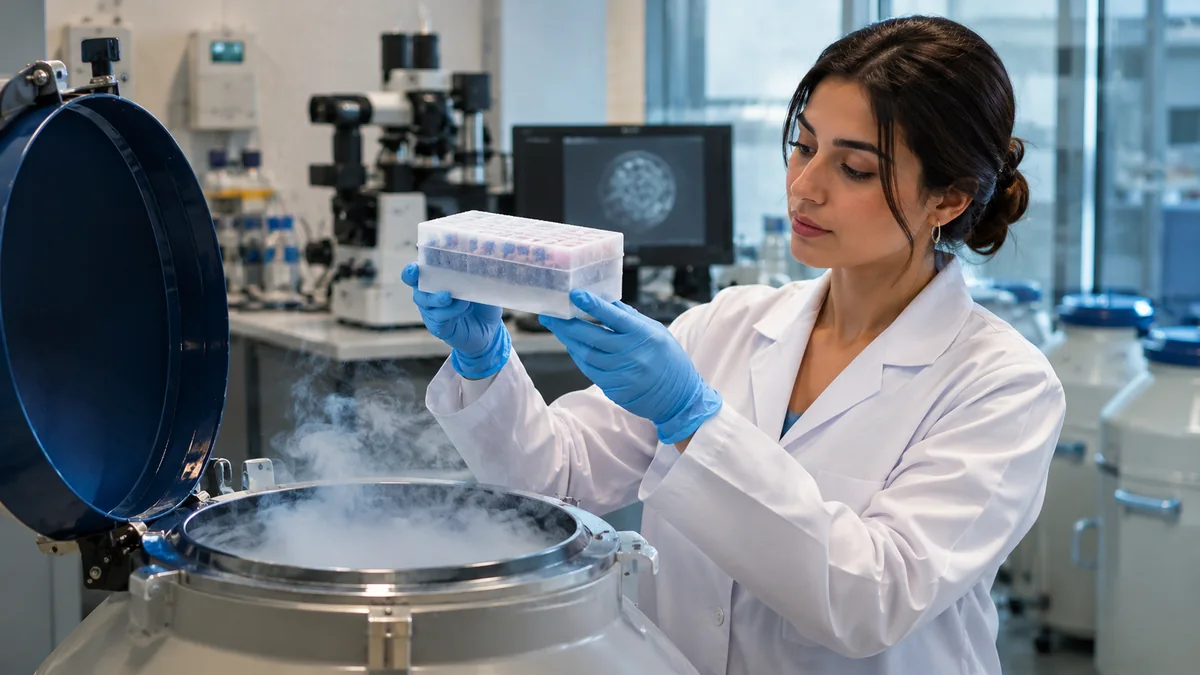
Once frozen, the eggs are placed in clearly labelled containers and kept in tanks of liquid nitrogen at extremely low temperatures (around -196°C). At that temperature, biological activity stops, which means the eggs do not age while they are in storage. An egg frozen at the age of 32 keeps the quality it had on that day, even if it is used many years later. Storage areas are monitored around the clock, and reputable labouratories keep records that link every sample to the patient it belongs to.
Does Time in Storage Affect the Eggs?
Current scientific evidence suggests that the length of time in storage does not reduce the quality of eggs that have been frozen properly. The age of the woman at the time of freezing is what shapes the outcome, and that is the main reason specialists often advise women to consider freezing earlier. Eggs collected in the late twenties or early thirties tend to carry a substantially higher chance of leading to a healthy pregnancy than eggs collected later, and storage does not change that starting point.
Annual Renewals and Consent
Storage comes with paperwork and ongoing fees. Most clinics include the first year of storage in the freezing package, and after that the patient renews storage every year. Patients also sign consent forms that set out how long the eggs can be kept, what happens if renewal is missed, and what the options are at the end of the storage period. Rules on storage limits and consent vary by country and can change, so it is worth asking the clinic to explain the current requirements in the UAE and to keep contact details up to date so that renewal notices never go astray.
When You Are Ready to Use Your Frozen Eggs
When a woman decides to use her eggs, the labouratory warms them in a controlled process called thawing. The embryologist checks which eggs have survived, and the survivors are fertilised in most cases using Intracytoplasmic Sperm Injection (ICSI), where a single sperm is injected into each egg. The fertilised eggs are then grown in the labouratory for several days until they reach blastocyst stage, and a healthy embryo is chosen for transfer to the uterus. Any remaining embryos can be frozen for later attempts.
Not every egg will survive thawing, not every survivor will fertilise, and not every embryo will develop, so the number of eggs stored at the start matters. Specialists often suggest collecting a good number of mature eggs, and the right target depends on age and ovarian reserve, which is why some women need more than one stimulation cycle.
What Shapes the Chance of a Future Pregnancy
Several factors work together. The age at which the eggs were frozen is the largest factor, followed by the number and quality of the eggs collected. The health of the uterus at the time of transfer, the quality of the sperm used, and the skill of the labouratory all play a part. Egg freezing gives a woman more options, but it does not guarantee a pregnancy, and a good clinic says so plainly during the first consultation.
Questions Worth Asking Before You Freeze
Women thinking about egg freezing can ask the clinic how long it keeps eggs, how storage is monitored (such as using automated RFID tracking systems), what renewal costs look like, what happens if they move abroad, and how the laboratory reports survival rates after thawing. Clear answers to these questions say a lot about how a clinic plans to look after the eggs for the long term.
Women considering fertility preservation may also benefit from understanding the broader journey of reproductive healthcare. Our guide to pregnancy care in Dubai explains important considerations such as choosing healthcare providers, understanding medical consultations, and planning for future maternity care.
How ART Fertility Clinics Deliver Egg Freezing Care
ART Fertility Clinics treats egg freezing as a long-term relationship and not a single procedure. With clinics in Abu Dhabi, Al Ain and two locations in Dubai, the team builds each protocol around the patient’s own hormone levels and ovarian response, so that stimulation matches the individual and not a fixed template. Patients meet a specialist to talk through storage, renewal and future use before the cycle starts, which keeps the decision informed from the first day to the day the eggs are needed.