

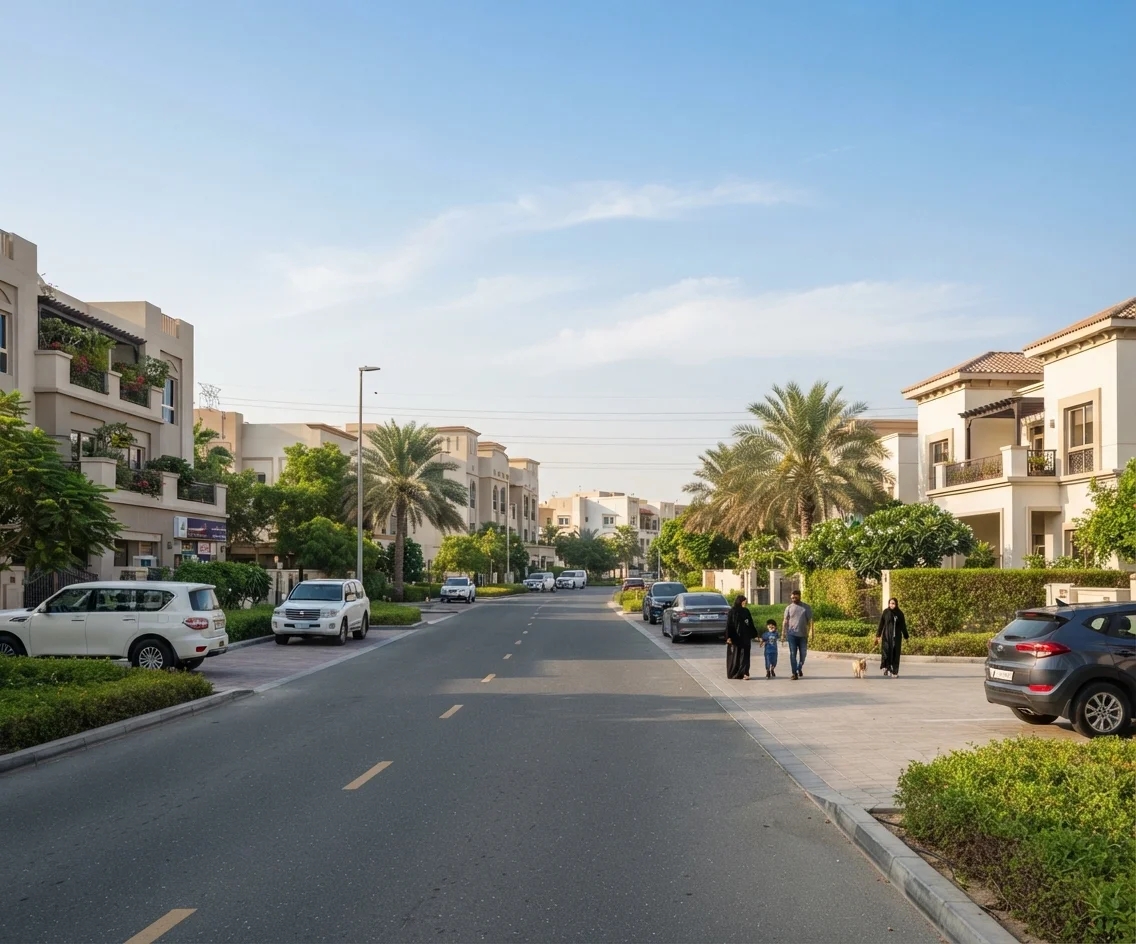
Dubai has no shortage of flashy new districts, but Al Warqa 1 stands apart for a simpler reason: it was here first. This eastern Dubai community grew out of an old farming settlement long before the city’s skyline took shape, and today it offers something increasingly rare in Dubai real estate, genuine space, at prices that don’t require a second job to afford. This guide breaks down everything worth knowing, from location and property options to schools, transport, and daily life.
Highlights
| Detail | Information |
|---|---|
| Community name meaning | “Al Warqa” translates roughly to dove, a nod to the area’s quiet origins |
| Sub-communities | Al Warqa 1 through Al Warqa 5 |
| Main roads | Sheikh Mohammed Bin Zayed Road (E311), Al Awir Road (E44) |
| Distance to Dubai Creek | Around 25 km east |
| Airport drive time | Roughly 14 to 20 minutes |
| Property mix | Villas (4 to 9 bedrooms) and mid-rise apartments (studio to 3-bed) |
| Apartment rent | AED 53,000 to 84,000 per year |
| Villa rent | AED 70,000 to over 700,000 per year, size dependent |
Al Warqa Location and Neighbourhood
The wider Al Warqa district sits southeast of Dubai Creek, bordered by Mirdif to the north and International City to the south. It runs along two major highways, giving residents fast access to central Dubai while keeping the community itself away from through traffic. That combination, quiet streets backed by strong road access, is the whole reason people choose this side of the city.
The area’s roots go back over a hundred years, starting as a small farming and trading settlement. That history shows in the older, more established feel of the streets closest to the center, particularly around the district’s first sub-community, where mature landscaping and low density still define the neighborhood.
The Five Al Warqa Communities
Al Warqa isn’t one neighborhood but five, each with its own character and property mix.
Al Warqa 1 is the oldest and most developed of the five. It sits right at the junction of Sheikh Mohammed Bin Zayed Road and Al Awir Road, and it mixes traditional Emirati-style villas with newer mid-rise apartment buildings. Rents here tend to sit on the more affordable end of the district.
Al Warqa 2 carries a similar residential character with a slightly newer building stock and a strong concentration of villa compounds aimed at families.
Al Warqa 3 is known for larger villa plots, with some units stretching past 12,000 square feet and rents that climb well above the district average for bigger homes.
Al Warqa 4 rounds out the residential cluster with a mix of villas and apartments, generally priced between its neighboring sub-communities on either side.
Al Warqa 5 is different from the rest. Rather than housing, it’s largely made up of Dubai Safari Park, making it more of a leisure destination than a residential pocket.
Properties in Al Warqa 1 Dubai
Housing here splits cleanly into two categories, and the right choice depends heavily on household size and budget.
Villas define the neighborhood’s identity. Standalone and compound villas range from 4 to 9 bedrooms, with built-up areas between 5,000 and 15,000 square feet. Most include private gardens, maid’s rooms, and parking, and many carry the traditional architectural style the area is known for.
Apartments are concentrated in mid-rise buildings and range from studios up to 3-bedroom layouts. These units typically include marble kitchen countertops, en-suite bedrooms, and balconies, and they suit tenants who want the neighborhood’s calm without villa-sized upkeep.
Studio Apartments
Studio units cover roughly 345 to 850 square feet and come with a built-in wardrobe, a compact kitchen, and an en-suite bathroom. These are the entry point for anyone testing the neighborhood before committing to something bigger.
1 Bedroom Apartments
One-bedroom layouts step up in finish quality, with marble kitchen countertops, a bright living room, a balcony, and a powder room in most buildings. Sizes generally start around 700 square feet.
2 and 3 Bedroom Apartments
Larger units span roughly 800 to 2,670 square feet, with higher-quality fixtures in both the kitchen and bathrooms. These layouts suit families who still prefer apartment living over a villa, or tenants who want extra room for a home office.
| Unit Type | Bedrooms | Typical Yearly Rent |
|---|---|---|
| Apartment | Studio | From AED 37,000 |
| Apartment | 1 to 2-bed | AED 53,000 to 84,000 |
| Apartment | 3-bed | AED 84,000 to 120,000 |
| Villa | 4-bed | AED 250,000 to 350,000 |
| Villa | 5 to 6-bed | AED 300,000 to 450,000 |
Rental Trends
Rents in the community have stayed relatively stable compared to central Dubai, where fast-moving demand pushes prices up every renewal cycle. Studios and one-bedroom units see the most turnover, while villas tend to attract longer tenancies, since families relocating here are usually planning to stay for several years rather than one lease term. Listings dated mid-2026 show apartment rents clustering in the AED 40,000 to 87,000 range depending on size and building age, confirming the broader range above.
Popular Buildings
A handful of mid-rise buildings anchor the apartment market here. Al Shawi Building, an 8-storey block in the heart of the community, offers 1 and 2-bedroom units with covered parking and round-the-clock security. Al Telal 9 and Al Bahri Grand Residence are seven and eight-storey towers offering similar 1 and 2-bedroom layouts with shared recreational facilities, including rooftop pools in some cases. Humaid Al Doosari Building and Al Warqa Western Residence round out the more commonly listed options, the latter offering newer 1, 2, and 3-bedroom units with a gym, pool, and kids’ play area.
Who Should Consider Living Here
Families get the most out of the neighborhood, thanks to villa-sized space, nearby schools, and quiet residential streets. Young professionals looking for lower rent without leaving Dubai entirely often land in the area’s apartments. Long-term renters benefit most, since the community rewards people who settle in rather than those planning a short stay.
Pros and Cons of Renting Here
| Pros | Cons |
|---|---|
| Rents below Dubai’s citywide average | No direct metro station in the community |
| Spacious villas with private gardens | Fewer international dining and retail chains |
| Long, established history and mature streets | More car dependent than central Dubai |
| Strong highway access via E311 and E44 | Some newer phases still under construction |
Transportation and Parking
Getting around the community means relying mostly on a car. There’s no metro station inside the community, so residents typically drive or head to the nearest stations at Rashidiya or Al Nahda, backed up by local bus routes. Villas generally come with dedicated parking, while apartment buildings offer allocated or shared parking depending on the building.
Once on the road, the location works in your favor. Downtown Dubai, Business Bay, and Deira are all reachable without much hassle, and Dubai International Airport typically takes between 14 and 20 minutes depending on traffic and route.
Amenities, Schools and Healthcare
Schools and Nurseries
Families weigh school access heavily, and the area holds up well. GEMS Our Own English High School and Primus Private School both operate nearby, alongside several nurseries serving younger children. This mix supports the district’s large expatriate and multicultural population.
Healthcare Facilities
Aster Clinic and a handful of other medical centers sit within a short drive, covering everyday checkups and routine care without a long trip across the city.
Gyms
Most residents lean on building-level gyms rather than standalone fitness centers, since many apartment towers here, including Al Shawi Building, Al Bahri Grand Residence, and Al Warqa Western Residence, come with an on-site gymnasium and swimming pool included in the rent. Villa residents typically use nearby community sports courts or drive to fitness chains in Mirdif for a wider range of equipment and classes.
Supermarkets
Aswaaq Al Warqa and several independent supermarkets handle daily grocery needs, keeping most everyday errands within a short walk or drive for residents.
Mosques
Mosques are spread throughout the community, positioned within walking distance of most residential clusters, and they play a central role in the area’s strong sense of local, everyday routine. Additional places of worship, including Hindu temples, are accessible in the nearby Bur Dubai area for residents who need them.
Hotels
The community itself isn’t a hotel district, but nearby options cover most budgets. Premier Inn Dubai Dragon Mart and Ibis Styles Dragon Mart offer budget-friendly stays a short drive away, while Millennium Place Mirdif and Holiday Inn & Suites Dubai Festival City sit a bit further out with fuller amenities. For visiting family or short-term guests, these options cover everything from basic and affordable to comfortable and mid-range without needing to book somewhere in central Dubai.
Lifestyle: Malls, Restaurants and Things to Do in Al Warqa
Q1 Mall and Al Warqa Mall cover the basics: retail, casual dining, and entertainment within a short drive of most homes. For bigger shopping trips, Mirdif City Centre, Dragon Mart, and Dubai Festival City Mall are all reachable in minutes.
The dining scene skips the international chains in favor of something more local. Small, family-run cafeterias and cafes serve fresh juices, traditional Middle Eastern snacks, and home-style South Asian cooking, giving the area a food culture that rewards residents who actually explore their own neighborhood.
Visiting Dubai Safari Park
Dubai Safari Park sits within the wider Al Warqa district (in Al Warqa 5) and makes for an easy family day trip without leaving the area entirely. It’s one of the largest safari parks in the UAE, and its presence in the district gives residents a genuine leisure landmark that most other Dubai suburbs simply don’t have on their doorstep.
Parks
Closer to home, neighborhood parks and landscaped sidewalks support a walkable, family-friendly routine that denser parts of Dubai often lack. Several community parks are spread across the sub-communities, typically featuring shaded seating, walking tracks, and play areas for children.
Beaches Nearby
There’s no beach within the community itself, since it sits well inland from Dubai’s coastline. The closest option, Al Mamzar Beach Park, is roughly 23 to 24 kilometers away, or about a 20 to 25 minute drive. For a longer outing, Jumeirah Beach and Kite Beach are both around 30 minutes west, offering the sandy, waterfront experience residents can’t get closer to home.
Landmarks and Outdoor Activities
Beyond the safari park, residents have easy access to Desert Palm Polo Club for those interested in polo and equestrian activities, along with jogging and cycling tracks woven through several of the community parks. Bigger landmarks like Dubai Frame and Downtown Dubai’s attractions sit within a reasonable drive for a day out.
Final Thoughts
Al Warqa 1 isn’t chasing skyline views or nightlife, and that’s exactly its appeal. It offers spacious villas, below-average rents, strong highway access, and a neighborhood history that most newer Dubai communities simply don’t have. For families and long-term renters who value space and affordability over central location, it remains one of the more practical choices in the city.
FAQs
Is Al Warqa 1 a good place to live?
Yes, especially for families and long-term residents who prioritize space and affordability over central location and metro access.
What is the average rent here?
Apartments typically run AED 53,000 to 84,000 per year, while villas range from around AED 70,000 up to 450,000 or more depending on size.
Which metro station is closest to the area?
There’s no station within the community itself. Rashidiya and Al Nahda are the nearest options, and most residents rely on cars or local buses.
Can I live here without a car?
It’s difficult. Public transport coverage is limited, and most daily errands and commutes assume access to a vehicle.
Is Dubai Safari Park in Al Warqa 1?
No. The park sits in Al Warqa 5, a separate sub-community within the wider Al Warqa district.
Is this area better than Mirdif?
It depends on priorities. This community generally offers lower rents and a quieter feel, while Mirdif has more established retail and dining options.
Can I own property in Al Warqa Dubai?
Ownership rules depend on the specific plot and developer, so buyers should confirm freehold status directly with a licensed agent before committing.
