

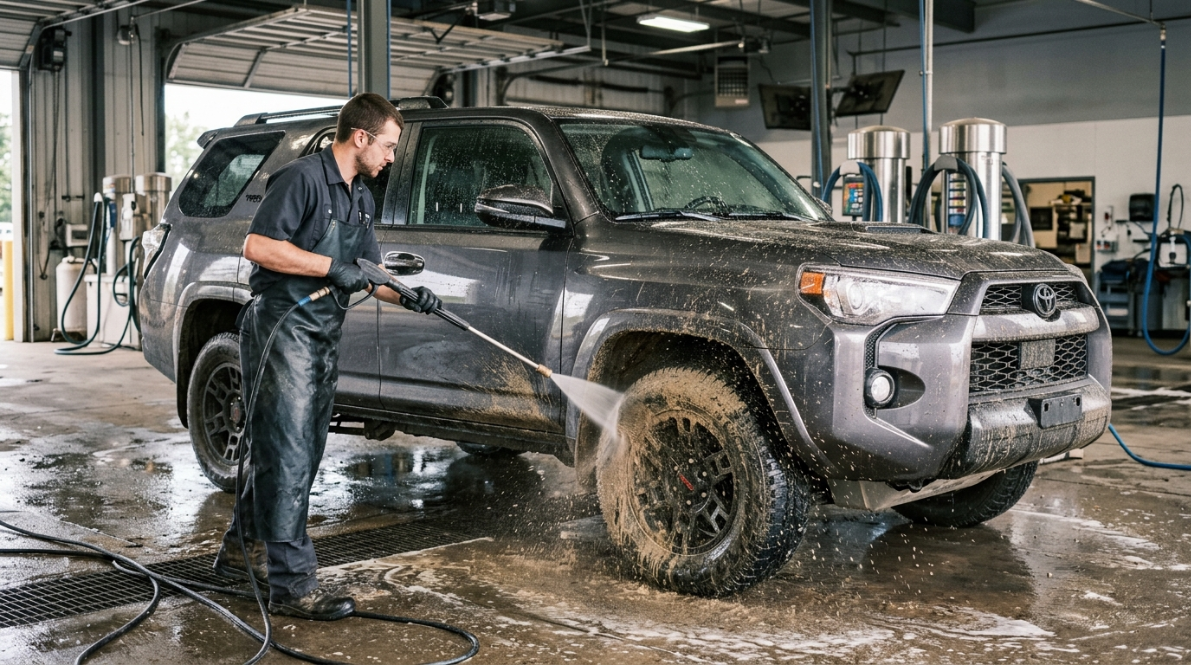
Driving through Mussafah can expose your car to fine sand, industrial dust, road grime, and small pieces of gravel. These materials can quickly make a clean vehicle look dull and may damage the paint if not removed properly.
The best way to keep your car looking new is to clean it soon after driving through dusty areas. Rinsing loose grit before touching the paint, using the right washing method, protecting the body with suitable products, and caring for the interior can help maintain your car’s appearance for longer.
Why Can Driving in Mussafah Affect Your Car’s Appearance?
Mussafah has busy industrial and commercial areas where vehicles can encounter dust, sand, grease, and road debris. Fine particles can settle on painted surfaces, windows, wheels, and the undercarriage.
If these particles are rubbed across the paint during cleaning, they can leave small scratches and make the clear coat look dull. Regular cleaning is therefore important, especially after driving through heavily dusty areas.
Quick and careful cleaning also helps prevent grime from building up and becoming harder to remove.
Tips To Keep Your Car Looking New After Driving Through Musaffah
1. Rinse Your Car Before Touching the Paint
The first step after driving through a dusty area is to rinse the vehicle thoroughly. Use a strong water spray to loosen and remove sand, dust, and road grime before using a wash mitt or sponge.
Pay extra attention to the lower body panels, wheel arches, wheels, and undercarriage because these areas collect more dirt. Avoid dry wiping a dusty vehicle. Fine sand can act like sandpaper and leave swirl marks or scratches across the clear coat.
2. Use the Right Car Washing Method
After rinsing away loose dirt, use a two-bucket hand wash with a quality car shampoo and microfiber wash mitt. Keep one bucket for soapy water and another for rinsing the mitt. This reduces the chance of moving trapped grit back onto the paint.
Work from the top of the vehicle toward the lower sections, where more dirt usually collects. After washing, dry the car with a clean microfiber towel to reduce water spots and protect the paint surface.
3. Protect Your Paint From Dust and Road Debris
Regular washing removes dirt, but additional protection can help reduce the effect of harsh road conditions. Ceramic coatings and quality paint sealants create a protective layer that makes the surface easier to clean.
Wax can also provide a temporary barrier and add shine. If you want stronger protection against stone chips and road debris, a trusted workshop such as Zenfo Auto Services can help with paint protection film in Abu Dhabi, especially for high-impact areas such as the front bumper, hood, and side mirrors.
4. Protect High-Impact Areas With Paint Protection Film
Some parts of a vehicle receive more impact from gravel, sand, and road debris than others. The front bumper, hood, side mirrors, and front fenders are common areas where small chips and marks can appear.
Paint protection film creates a clear protective layer over these surfaces and helps reduce damage from flying stones and other road debris. It can be especially useful for drivers who regularly travel on busy roads or spend a lot of time around industrial areas.
5. Do Not Forget the Glass and Mirrors
Clean glass is important for both appearance and driving safety. Dust and oily road film can build up on the windshield, side windows, and mirrors, making it harder to see clearly, especially at night or when facing bright headlights.
Clean these surfaces regularly with a suitable glass cleaner and a clean microfiber cloth. Check the windshield for stubborn marks and make sure the wiper blades are not spreading dirt across the glass. Clear mirrors also improve visibility when changing lanes.
6. Keep the Interior Free From Fine Dust
Industrial dust and fine sand can easily enter the cabin through open doors, shoes, and ventilation systems. Vacuum the carpets, floor mats, and seats regularly to prevent grit from collecting inside the vehicle.
Wipe the dashboard and trim with a clean microfiber cloth instead of using rough materials that may leave marks.
Leather seats can also benefit from a suitable conditioner, particularly during hot weather. Cleaning the air vents can help reduce dust buildup and keep the cabin more comfortable.
7. Give the Undercarriage Extra Attention
The underside of the car is easy to forget because it is rarely visible. However, it can collect sand, mud, oil, and industrial grime during regular driving. Rinsing the undercarriage helps remove this buildup before it becomes difficult to clean.
It is also useful after driving through areas with loose dirt or road work. Keeping this area clean makes it easier to spot leaks, corrosion, or damaged parts during routine vehicle checks and maintenance.
Simple Habits That Help Maintain a New Look
Keeping a car looking fresh does not always require complicated care. Small habits can make a major difference over time.
- Rinse before washing to remove loose sand and dust.
- Never dry-wipe dusty paint because grit can cause scratches.
- Use clean microfiber towels for washing and drying.
- Wash regularly instead of allowing grime to build up.
- Apply a protective coating or sealant to help repel dirt.
- Clean the interior often to prevent fine sand from collecting.
- Use a sunshade when parking outside to reduce UV exposure inside the cabin.
Conclusion
Driving through Mussafah does not mean your car has to lose its clean and polished appearance. Removing dust quickly, using safe washing methods, protecting high-impact paint areas, and keeping the interior and undercarriage clean can help your vehicle stay in better condition.
Regular care also makes it easier to spot small problems before they become bigger concerns. With the right cleaning and paint protection routine, your car can continue looking fresh even after frequent drives through dusty and busy industrial areas.
