
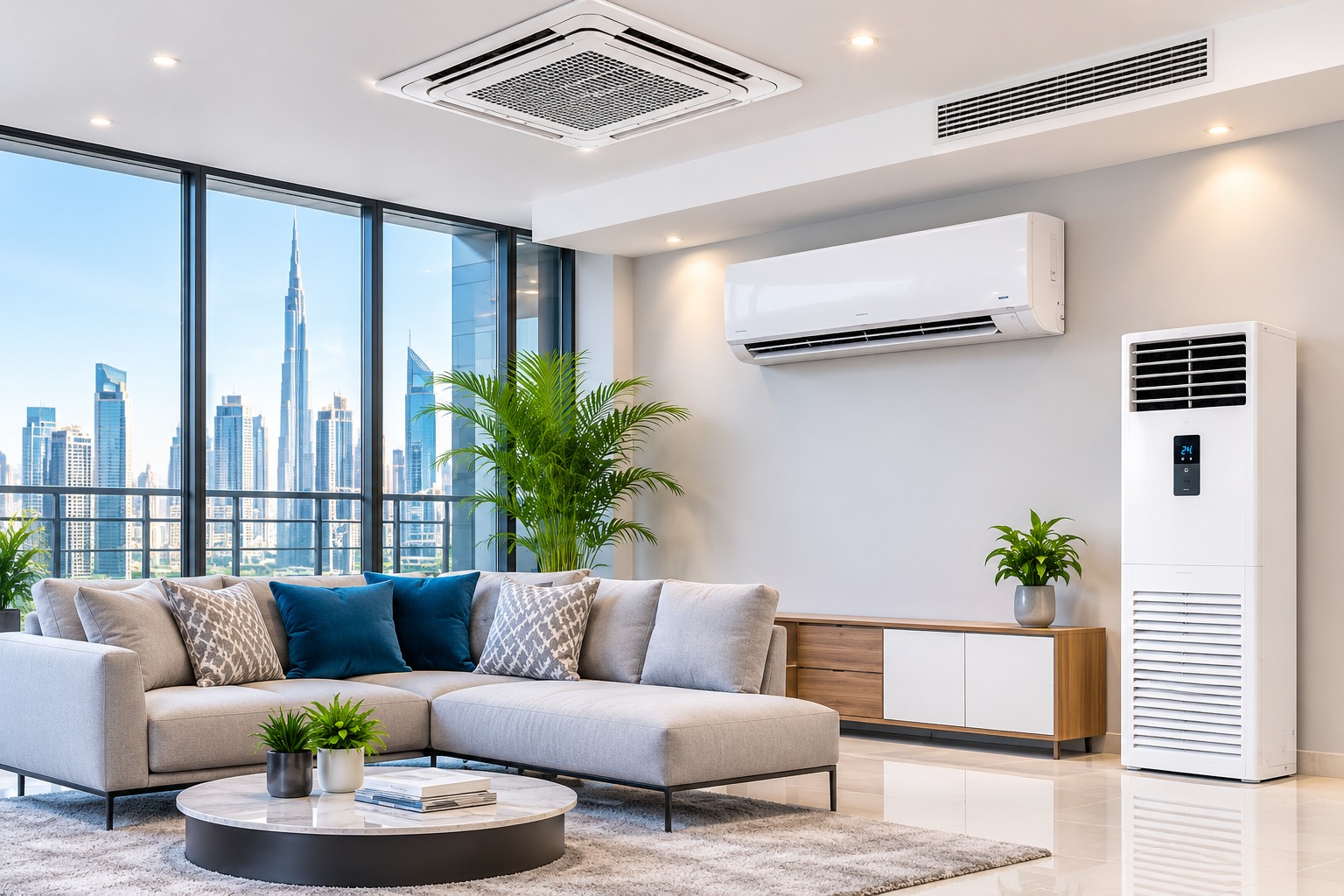
Dubai’s hot climate makes air conditioning an essential requirement for homes, offices, retail spaces, and commercial buildings. With temperatures remaining high for much of the year, selecting a reliable air conditioning system is important for maintaining indoor comfort and ensuring consistent cooling performance.
However, choosing an air conditioner is only one part of the purchasing process. Finding a dependable supplier, comparing available models, understanding installation requirements, and checking after-sales support are equally important.
Whether you are furnishing a new property or upgrading an existing cooling system, understanding what to look for can help you make a better purchasing decision.
Why Choosing the Right AC Supplier Matters
The supplier you choose can influence your overall purchasing experience. A reliable supplier should help customers understand available products, compare suitable models, and identify equipment that matches their property’s cooling requirements.
When researching an O General AC, buyers should consider more than the product’s advertised price. Product specifications, availability, warranty conditions, and installation support can all affect long-term value.
Before making a purchase, consider the following factors:
- Availability of suitable air conditioning models.
- Clear product specifications and technical information.
- Transparent pricing and installation costs.
- Manufacturer warranty and service conditions.
- Availability of maintenance and technical support.
- Experience with residential and commercial cooling requirements.
Comparing these details can help homeowners and businesses select equipment that meets their expectations.
Understanding Different Air Conditioning Requirements
Every property has different cooling requirements. A small apartment, a large villa, and a commercial office will not necessarily need the same type of air conditioning system.
Understanding the available options is the first step toward selecting suitable equipment.
1. Residential Air Conditioning Systems
Residential properties generally require cooling solutions that provide consistent temperatures without unnecessary energy consumption.
Split AC systems are commonly considered for bedrooms, living rooms, and smaller spaces. Larger villas may require multiple units or centralized cooling solutions depending on their layout.
When choosing an AC for residential use, consider room dimensions, ceiling height, insulation, window placement, and the number of occupants.
2. Commercial Air Conditioning Systems
Commercial properties often have more complex cooling requirements because of their size, occupancy, and operating hours.
Offices, retail outlets, restaurants, and other business environments may require systems capable of distributing conditioned air across larger spaces.
Cassette, ducted, and multi-zone systems are among the options that businesses may consider depending on their building design.
A professional assessment can help determine which configuration is appropriate.
3. Centralized Air Conditioning Solutions
Centralized systems are commonly used in larger buildings where cooling needs to be distributed across several rooms or zones.
These systems require proper planning to ensure suitable airflow, duct sizing, insulation, and temperature control.
Property owners should consider both the initial installation requirements and the long-term maintenance needs before selecting a centralized cooling solution.
What to Consider Before Purchasing an O General Air Conditioner
Choosing an appropriate air conditioner involves comparing several technical and practical factors.
Cooling Capacity
Cooling capacity is one of the most important considerations when selecting an AC unit. It should correspond to the size and characteristics of the space being cooled.
An undersized unit may struggle to maintain the desired temperature, while an oversized system can experience inefficient operating cycles.
Professional cooling load calculations can help determine the appropriate capacity.
Energy Efficiency
Since air conditioners may operate for extended periods in Dubai, energy efficiency deserves careful attention.
Buyers should compare available efficiency ratings, operating specifications, and expected usage requirements.
Selecting an appropriately sized and efficient system can help manage electricity consumption over time.
Product Specifications
Before purchasing, review the manufacturer’s technical documentation and compare important specifications.
These may include cooling capacity, operating noise, dimensions, electrical requirements, refrigerant type, and available features.
Understanding these details makes it easier to compare different models objectively.
Warranty and Technical Support
Warranty coverage and after-sales assistance are important parts of any major appliance purchase.
Customers should understand the warranty period, coverage conditions, exclusions, and the process for requesting technical assistance.
It is also useful to confirm the availability of replacement parts and qualified maintenance services.
How to Find a Reliable O General AC Supplier in Dubai
With different air conditioning sellers and service providers available in the UAE, buyers should take time to evaluate their options.
When comparing an O General AC supplier in Dubai, consider the following points before making a final decision.
Product availability: Check whether the supplier offers models that match your required cooling capacity and installation preferences.
Product information: A dependable supplier should provide clear technical specifications and explain the differences between available systems.
Installation support: Ask whether installation services are available and what the installation package includes.
Warranty information: Confirm the applicable warranty terms and the process for handling product-related issues.
Customer assistance: Consider whether the supplier can answer technical questions and provide guidance before and after the purchase.
Taking these steps can reduce uncertainty and help customers choose a supplier that meets their expectations.
The Importance of Professional AC Installation
Even a high-quality air conditioner may not perform as expected if it is installed incorrectly.
Professional installation helps ensure that the equipment is positioned appropriately and connected according to manufacturer requirements.
The installation process generally involves several important steps:
- Property assessment: Evaluate the space, installation location, and cooling requirements.
- Equipment selection: Confirm the appropriate system type and capacity.
- Installation planning: Determine piping routes, electrical connections, and drainage arrangements.
- Unit installation: Position and connect indoor and outdoor components correctly.
- Performance testing: Check airflow, cooling operation, drainage, and system functionality.
- Customer guidance: Explain operating controls and basic maintenance requirements.
Following an appropriate installation process can help reduce avoidable problems and support reliable system operation.
Practical Tips for Maintaining Your Air Conditioner
Regular maintenance is essential for keeping air conditioning equipment in good operating condition, particularly in environments where systems experience frequent use.
Here are some practical maintenance recommendations:
Clean or Replace Air Filters
Air filters collect dust and airborne particles over time. Dirty filters can restrict airflow and reduce cooling performance. Follow the manufacturer’s recommendations for cleaning or replacement.
Inspect the Outdoor Unit
Outdoor units can accumulate dust and debris. Keeping the surrounding area clear helps maintain adequate airflow.
Check Drainage Systems
Blocked condensate drainage can lead to water leakage and moisture problems. Periodic inspection helps identify drainage issues early.
Schedule Professional Servicing
Professional maintenance may include coil inspection, electrical checks, drainage cleaning, and an assessment of system operation.
Avoid Unnecessary Temperature Adjustments
Maintaining a comfortable temperature setting and reducing frequent changes can support consistent operation.
Common Mistakes to Avoid When Buying an AC System
Many buyers focus primarily on purchasing price without considering the complete cost of ownership.
Some common mistakes include:
- Selecting an AC unit without calculating the required cooling capacity.
- Ignoring installation and additional material costs.
- Overlooking warranty conditions.
- Choosing a system unsuitable for the property’s layout.
- Failing to compare energy efficiency.
- Neglecting future maintenance requirements.
Avoiding these mistakes can help customers make more informed decisions and reduce the possibility of unexpected expenses.
Final Thoughts
Choosing the right air conditioning supplier in Dubai requires careful consideration of product quality, cooling requirements, installation support, warranty conditions, and long-term maintenance.
Whether you need an AC system for a residential apartment, a family villa, or a commercial property, comparing available options before purchasing can help you find a solution that meets your requirements.
By selecting appropriately sized equipment, working with a dependable supplier, and following regular maintenance practices, property owners can support comfortable indoor environments throughout Dubai’s hot climate.