

Set along the edge of Dubai Creek, Al Ghubaiba Metro Station is one of those rare stops that gives you far more than just a metro connection. Located in the Al Shindagha area of Bur Dubai, the station sits right at the intersection of modern city transport and old Dubai’s most authentic neighbourhoods. Heritage sites, traditional markets, and intercity bus connections all come together within a short walk of this single platform.
Operational since 9 September 2011, Al Ghubaiba is a key part of the Dubai Metro Green Line and one of the few stations in the entire network that functions as a true multi-modal hub. Whether you are a daily commuter heading across emirates, a tourist exploring the Creek for the first time, or a resident picking up the quickest route to Sharjah, this station has the connections to make it happen. This guide covers everything you need before you travel.
Which Metro Line Does Al Ghubaiba Serve?
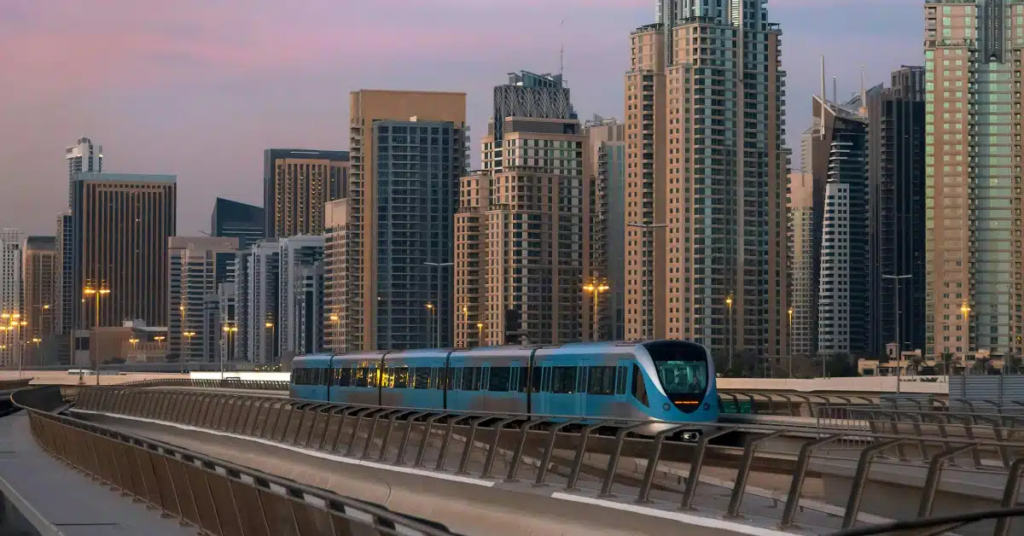
Al Ghubaiba Metro Station sits on the Green Line of the Dubai Metro, assigned station code G24. The Green Line stretches from Creek Station in the south all the way to Etisalat by e& Station in the north, cutting through Bur Dubai, Deira, and the older residential districts that line the Creek on both sides. Al Ghubaiba falls toward the southern end of this line, positioned between Al Ras Station to the north and Sharaf DG Station to the south.
Travelling northbound from here, trains pass through Al Ras, Baniyas Square, Salah Al Din, and Union Station, where you can transfer directly to the Red Line for Downtown Dubai, Dubai Marina, and both airport terminals. Travelling southbound, the line passes through Al Fahidi and BurJuman, the second Red Line interchange on this corridor, before continuing to Oud Metha, Dubai Healthcare City, and the terminal at Creek Station. For most visitors, the key connection to know is the BurJuman transfer for Dubai Mall and Burj Khalifa.
Green Line Route Overview
The Green Line serves a corridor that covers both the oldest and some of the busiest commercial parts of Dubai. From Al Ghubaiba, the northbound stretch toward Union opens up connections to the entire Red Line network, effectively putting every major Dubai destination within a single transfer. The southbound direction toward Creek Station is shorter but passes through Al Fahidi, one of the most visited heritage stops on the entire metro network, making it a natural next stop for visitors starting at Al Ghubaiba and looking to explore Old Bur Dubai on foot.
Where Is Al Ghubaiba Metro Station Located?
Al Ghubaiba Metro Station is located in the Al Shindagha district of Bur Dubai, on the southwestern bank of Dubai Creek. This is one of the oldest settled parts of the city, with a neighbourhood character that feels entirely different from the glass-and-steel commercial zones most people associate with modern Dubai. The streets around the station are lined with a mix of restored Emirati heritage buildings, traditional market lanes, low-rise residential blocks, and decades-old shops that have been serving the same community for generations.
The station’s central placement in this area makes it a natural starting point for anyone heading to the cultural and heritage side of Dubai. Al Fahidi Historical Neighbourhood is about 10 minutes on foot. The Textile Souk is closer. The Creek waterfront and the abra crossing to Deira are a 5-minute walk in the other direction. And for those continuing beyond Dubai by intercity bus, Al Ghubaiba Bus Station sits directly across the road. The station falls within Fare Zone 5 of the Dubai Metro fare structure.
Close to Dubai’s Cultural Landmarks
From the station exit, the Al Fahidi Historical Neighbourhood is the most significant walking destination, a preserved cluster of wind-tower houses and narrow lanes that represents what Bur Dubai looked like before the oil era transformed the city. Dubai Museum, housed inside Al Fahidi Fort which dates to 1787, sits within the same area and charges only AED 3 for adults. The Textile Souk, also known as the Old Souk, fills a covered arcade running parallel to the Creek and sells fabrics, pashminas, and tailored goods from dozens of independent traders. Meena Bazaar, a busy South Asian shopping and dining strip, starts just a few minutes in the opposite direction. These landmarks together make Al Ghubaiba one of the most walkable metro stations for cultural tourism in the entire Dubai network.
Metro Timings and Routes From Al Ghubaiba
Al Ghubaiba Metro Station follows the standard Green Line timetable set by the Roads and Transport Authority. The network operates on a split schedule across the week, with Sunday mornings starting noticeably later than the rest of the week and Friday nights running the latest into the following morning. Understanding this pattern prevents the most common timing mistake visitors make, which is assuming the Sunday morning service begins at the same time as a weekday.
On Monday through Saturday, the first train departs at 5:07 AM in both directions. Sunday mornings are the exception, with the first train departing at 8:07 AM, a full two hours later. This Sunday delay catches first-time travellers off guard more often than any other schedule detail on this line. Friday nights are the opposite end of the pattern: trains continue running past midnight, making Al Ghubaiba one of the more useful late-night metro stops for the weekend crowd returning from Deira or heading back through Bur Dubai after an evening out.
Daily Operating Hours
| Day | Operating Hours |
| Monday to Thursday | 5:00 AM to 12:00 AM (midnight) |
| Friday | 5:00 AM to 1:00 AM (Saturday morning) |
| Saturday | 5:00 AM to 12:00 AM (midnight) |
| Sunday | 8:00 AM to 12:00 AM (midnight) |
First and Last Train From Al Ghubaiba
| Direction | Monday to Thursday | Friday | Saturday | Sunday |
| Southbound to Creek Station | 5:07 AM / 11:49 PM | 5:07 AM / 12:49 AM | 5:07 AM / 11:49 PM | 8:07 AM / 11:48 PM |
| Northbound to Etisalat by e& | 5:07 AM / 11:39 PM | 5:07 AM / 12:38 AM | 5:07 AM / 11:37 PM | 8:07 AM / 11:36 PM |
Source: RTA Dubai, rta.ae. Always verify via the RTA S’hail app on the day of travel, particularly during Ramadan and public holidays when timings adjust.
Travel Times to Key Destinations
| Destination | Approx. Time | Route |
| Dubai Mall and Burj Khalifa | 20 to 25 min | Green Line to BurJuman, transfer Red Line |
| Mall of the Emirates | 30 to 35 min | Green Line to Union, transfer Red Line |
| Dubai International Airport | 25 to 40 min | Green Line to Union, transfer Red Line to T1 or T3 |
| Gold Souq and Spice Souq | 5 to 7 min by abra | Walk to marine station, AED 1 abra crossing |
| BurJuman Mall | 5 min | Green Line southbound, direct |
| Dubai Healthcare City | 12 min | Green Line southbound, direct |
| Union Station (Red Line transfer) | 8 to 10 min | Green Line northbound, direct |
| Sharjah via intercity bus | 45 to 60 min | Walk to Al Ghubaiba Bus Station, board E306 |
Amenities and Access at Al Ghubaiba Metro Station
Al Ghubaiba Metro Station is built across three levels that guide passengers smoothly from street entry to platform boarding. The ground level holds the station entrances, including direct access points from Al Ghubaiba Road and covered walkways connecting toward the bus terminal. The concourse level above contains the fare gates, Nol card machines, customer service desk, and the main public facilities. The platform level sits at the top, with two side platforms serving the northbound and southbound directions separately.
The station’s layout handles the consistent high footfall that comes with being a triple-transport hub without feeling cramped. Elevators connect all three levels for passengers with mobility needs, families with strollers, and travellers carrying luggage. Escalators run in both directions at the main access points. The station is fully air-conditioned throughout, which matters significantly during Dubai summers when outdoor temperatures regularly exceed 40 degrees Celsius.
Station Entrance and Layout
Multiple entrance points surround the station building, oriented toward Al Ghubaiba Road on one side and the pedestrian routes toward the Creek and heritage district on the other. The entrance you choose on exit makes a practical difference to your journey time. The entrance facing Al Ghubaiba Road leads most directly to the bus station across the street. The Creek-facing entrance routes you more efficiently toward Al Fahidi, the Textile Souk, and the marine transport station. Signage inside the station indicates both directions clearly, and station staff at the concourse level can confirm the quickest exit for your specific destination.
Facilities Inside the Station
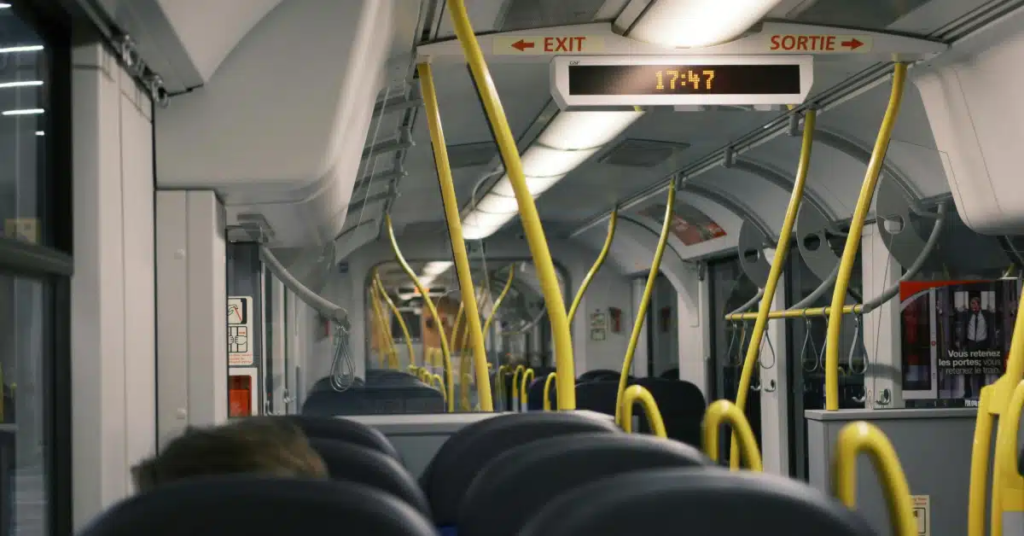
Inside the station, passengers find everything needed for a comfortable transit experience. Ticket vending machines and Nol card top-up points are positioned near every entrance, handling card purchase, recharge, and balance inquiry without queuing at the staffed desk. The customer service desk handles route queries, fare questions, lost card replacement, and general assistance. Real-time train arrival screens on both platforms show approaching services with accurate countdowns. Prayer rooms for men and women are available on the concourse level, and clean restrooms are maintained throughout operating hours. Free Wi-Fi under the Emirates network covers the station entirely and continues on board all Green Line trains.
Women and Children Cabin
As with all Dubai Metro stations, Al Ghubaiba has a clearly marked women-and-children-only cabin at the front of every train on the platform. This section is reserved exclusively for women and children under 10 and is enforced by RTA staff. Non-eligible passengers boarding this cabin may be asked to move. The designated sections are signposted on the platform floor and on screen doors, making them easy to identify before the train arrives.
Travel Tips for Commuting Through Al Ghubaiba
Planning your journey through Al Ghubaiba Metro Station with a few specific details in mind makes the experience noticeably smoother, whether you are using the station daily or visiting for the first time. The most important thing to remember is the Sunday morning schedule: the first train does not run until 8:07 AM, which is two full hours later than every other day of the week. Many visitors have arrived expecting a 5:00 AM or 6:00 AM service on Sunday and had to wait far longer than expected.
Keeping your Nol card topped up before arrival at Al Ghubaiba is particularly important if you plan to continue from here to an intercity bus or marine transport service. The bus station across the road accepts Nol cards on local Dubai routes, and RTA ferry services from the marine transport station also work with the same card. Topping up inside the metro station before exiting is faster than finding a machine once you are outside. During Ramadan and major public holidays, both metro and bus schedules shift, sometimes significantly, so checking the RTA S’hail app on the morning of travel is the most reliable approach regardless of what any printed or online timetable shows.
Best Time to Visit the Surrounding Area
If your purpose at Al Ghubaiba is to explore Old Dubai on foot, timing your arrival matters more here than at most other metro stations. The lanes around Al Fahidi, the Textile Souk, and Meena Bazaar have limited shade and narrow street widths that concentrate heat during the summer months. From May through September, the most comfortable visiting windows are before 10:00 AM in the morning, when the temperature is still manageable, or after 5:00 PM in the evening, when the light also improves dramatically for photography. The cooler months between October and April allow comfortable all-day exploration and represent the best season to build a full day around this station.
Bus and Ferry Connections From Al Ghubaiba
The transport value of Al Ghubaiba Metro Station extends well beyond the metro platform. Two additional transport hubs sit within a short walk of the station exits, together creating one of the most versatile transit points anywhere on the Dubai Metro network. Passengers can arrive here by metro and continue by intercity bus to another emirate, by traditional abra across Dubai Creek, or by RTA ferry along the coast, all without needing a taxi or ride-hailing app.
Bus Travel From Al Ghubaiba Bus Station
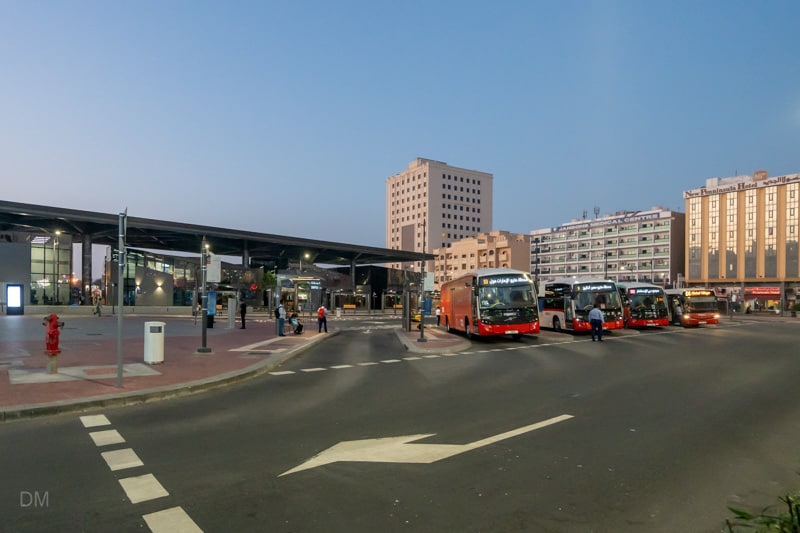
Al Ghubaiba Bus Station is directly across Al Ghubaiba Road from the metro exit, a 3 to 5 minute walk from the station gates. The bus terminal operates from early morning until midnight and handles both local Dubai routes and intercity services to neighbouring emirates. For passengers heading to Sharjah, the E306 route departs regularly for Al Jubail Bus Station. For Abu Dhabi, the E100 intercity service connects directly to the capital’s Central Bus Station. The E201 serves Al Ain. These intercity departures make Al Ghubaiba one of the most practical metro-to-bus transfer points in the entire city for residents commuting across emirate boundaries. For Dubai Mall, Route 29 provides a direct bus connection from this station. Route X23 reaches International City, and the night service N55 runs to Al Maktoum International Airport. Nol cards are accepted on all local Dubai bus routes. Intercity routes use separate ticketing, which can be confirmed at the bus station counter.
Marine Transport: Abra and Ferry Services
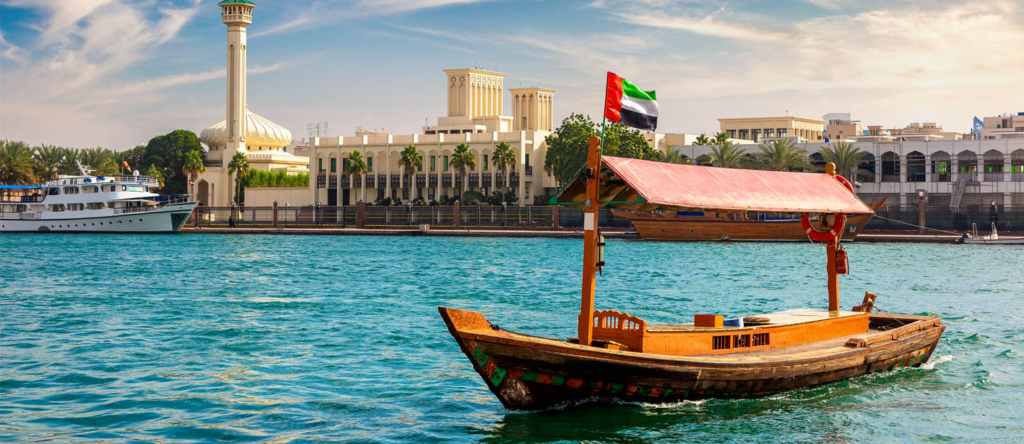
A short walk further from the bus station brings you to Al Ghubaiba Marine Transport Station, one of the most atmospheric transit points in the entire city. Traditional wooden abras cross from this station to the Deira side of Dubai Creek for AED 1 per person, a journey of approximately 5 to 7 minutes that has been making this crossing for decades and remains genuinely one of the most memorable short journeys available anywhere in the UAE. The landing point on the Deira side puts you within a 5-minute walk of the Gold Souq, Spice Souk, and the winding lanes of Deira’s old market district.
Beyond the abra, Al Ghubaiba Marine Transport Station also handles faster enclosed water taxi services and scheduled RTA ferry routes. The ferry to Dubai Marina provides a scenic coast-hugging journey that takes longer than the metro but offers a completely different perspective on the city. Ferries also connect to Al Jaddaf and to Sharjah Aquarium Station, giving passengers a cross-emirate marine option that most visitors never discover. Nol cards are accepted on RTA water bus and ferry services. Tickets for traditional abras are paid in cash on board.
Things to Do Around Al Ghubaiba Dubai
The neighbourhood surrounding Al Ghubaiba Metro Station is arguably the richest in terms of walkable cultural content on the entire Dubai Metro network. This is the part of the city that existed before the skyscrapers, before the world-record towers, and before the international airport brought the world to Dubai’s door. Walking from this station into the surrounding streets is one of the most effective ways to understand what made Dubai’s original community what it was.
Al Fahidi Historical Neighbourhood
Al Fahidi Historical Neighbourhood sits approximately 10 to 12 minutes on foot from the station exit and is the single most significant heritage destination in Bur Dubai. The area preserves a cluster of wind-tower houses, narrow lanes, and courtyard buildings that date back to the late 19th and early 20th centuries, when Bur Dubai was a thriving trading settlement on the Creek. Today the restored buildings house small museums, art galleries, traditional coffee shops, and cultural spaces. Entry to walk the neighbourhood is free, and it is one of the very few places in Dubai where you can spend time in an environment that looks and feels genuinely historical rather than reconstructed for tourism.
Dubai Museum
Dubai Museum sits inside Al Fahidi Fort, the oldest surviving building in Dubai, dating to 1787. The museum uses the fort’s original structure as a frame for exhibits covering the entire history of the emirate from its ancient Bedouin and pearl-diving roots through the discovery of oil and into the modern era. Admission is AED 3 for adults and AED 1 for children, making it one of the most affordable cultural experiences in the city. A visit takes between 45 minutes and 90 minutes depending on how deeply you engage with the exhibits.
Textile Souk and Creek Waterfront
The Textile Souk, also called the Bur Dubai Souk, runs through a covered arcade parallel to the Creek and offers fabric, tailoring services, pashminas, traditional clothing, and home textiles from dozens of independent traders. Prices are negotiable and the atmosphere is genuinely market-like rather than shopping-centre polished. The Creek waterfront runs alongside the souk and provides one of the best sunset photography positions in the city, with traditional dhow boats moored along the banks and the Deira skyline forming the backdrop. From the waterfront you are a few steps from the abra crossing that takes you across to the Gold Souq and Spice Souk on the Deira side.
Al Shindagha Heritage District
Al Shindagha Heritage District is a 12 to 15 minute walk from the station along the Creek bank and houses several significant cultural attractions including the Sheikh Saeed Al Maktoum House, the former residence of Dubai’s late ruler and now a museum of photographs and documents from the early 20th century. The Al Shindagha Museum itself is a more recently opened complex covering the history of the area through well-designed gallery spaces built into the restored heritage buildings. Entry fees vary by gallery section. The waterfront here is quieter than the main Creek area and offers a more relaxed setting for walking and photography.
Key Takeaways
Al Ghubaiba Metro Station stands out on the Dubai Metro Green Line for three reasons that no other station on this corridor quite matches. First, the multi-modal transport connection it anchors is genuinely comprehensive: Green Line metro, intercity and local bus services at Al Ghubaiba Bus Station, traditional abra crossings to Deira, and RTA ferry services to Dubai Marina and Sharjah all sit within a 5 to 10 minute walk of each other. Getting to almost any destination in Dubai or across the northern emirates from this single point requires no taxi and no ride-hailing app.
Second, the cultural and heritage content within walking distance of this station is the richest available from any metro stop in the city. Al Fahidi, Dubai Museum, the Textile Souk, the Creek waterfront, and the abra crossing to the Deira souks together represent a half-day of genuinely engaging exploration that costs almost nothing. Third, the timing details are important enough to be worth remembering before every journey. Sunday mornings start at 8:07 AM, two hours later than weekdays. Friday nights extend past midnight. The RTA S’hail app gives you the most accurate real-time schedule on the day, and it is always worth a quick check before you leave.
Frequently Asked Questions
Is Al Ghubaiba Metro Station on the Red Line or the Green Line?
Al Ghubaiba is on the Green Line only, station code G24. To reach Red Line destinations including Dubai Mall, Burj Khalifa, Mall of the Emirates, or Dubai International Airport, you transfer at either BurJuman Station travelling southbound or Union Station travelling northbound. Both are direct Green Line stops from Al Ghubaiba and the transfers are well-signed at each station.
What fare zone is Al Ghubaiba in and how much does it cost?
Al Ghubaiba Metro Station sits in Fare Zone 5 of the Dubai Metro network. Fares are calculated by the number of zones crossed during a journey rather than a fixed per-trip amount. A Silver Nol card trip within the same zone costs approximately AED 3, with longer cross-zone journeys costing more. You can purchase a Silver Nol card and top it up at the vending machines positioned at every station entrance. Children under 5 travel free on all Dubai Metro services.
How do I get to Dubai Mall from Al Ghubaiba Metro Station?
Take the Green Line southbound to BurJuman Station, then transfer to the Red Line and continue to Burj Khalifa/Dubai Mall Station. The total journey takes approximately 20 to 25 minutes and the station connects directly into the mall at the lower ground level, meaning no outdoor walking is required at the other end. This metro route is consistently faster than taking a taxi during peak traffic hours and significantly more affordable.
What time does the first and last train run at Al Ghubaiba?
From Monday through Saturday, the first train departs at 5:07 AM in both directions. On Sunday, the first train does not run until 8:07 AM, which is a significant two-hour difference from the rest of the week. The last train runs at approximately 11:37 PM to 11:49 PM on most days, extending to past 12:30 AM on Friday nights. These are the station-specific times rather than general network hours, and they should be confirmed via the RTA S’hail app before travel.
Can I use my Nol card for the bus and abra from Al Ghubaiba?
Yes. Nol cards are accepted on all local Dubai bus routes from Al Ghubaiba Bus Station, on RTA water bus and ferry services from the marine transport station, and across the entire Dubai Metro network. The traditional abra crossing to Deira costs AED 1 paid in cash on board and does not use the Nol card. Intercity buses to other emirates such as E306 to Sharjah or E100 to Abu Dhabi use separate ticketing systems, which can be confirmed at the bus station counter before boarding.
Is Al Ghubaiba Metro Station accessible for people with disabilities?
Yes. The station provides elevators connecting all three levels, escalators running in both directions, barrier-free walkways throughout the concourse and platform areas, tactile flooring for visually impaired passengers, and wide fare gates for wheelchair access. The station meets the full accessibility standard applied across all Dubai Metro stations by RTA and is consistently one of the better-maintained accessible transit points in the Old Dubai area.
How much does the abra crossing cost from Al Ghubaiba?
The traditional wooden abra crossing from Al Ghubaiba Marine Transport Station to the Deira side of Dubai Creek costs AED 1 per person. This has been the fare for the Creek crossing for many years and remains one of the most iconic and affordable short journeys available anywhere in the UAE. The crossing takes approximately 5 to 7 minutes and lands you near the Gold Souq and Spice Souk on the Deira waterfront.
What intercity buses depart from Al Ghubaiba Bus Station?
Al Ghubaiba Bus Station, a 3 to 5 minute walk from the metro exit, handles several key intercity routes. The E306 serves Sharjah Al Jubail Bus Station. The E100 connects to Abu Dhabi Central Bus Station. The E201 runs to Al Ain Bus Station. For connections toward Ajman, routes E400 and E411 provide onward services via Sharjah. These buses operate throughout the day from early morning until around midnight and are among the most affordable options for cross-emirate travel in the northern UAE.
