

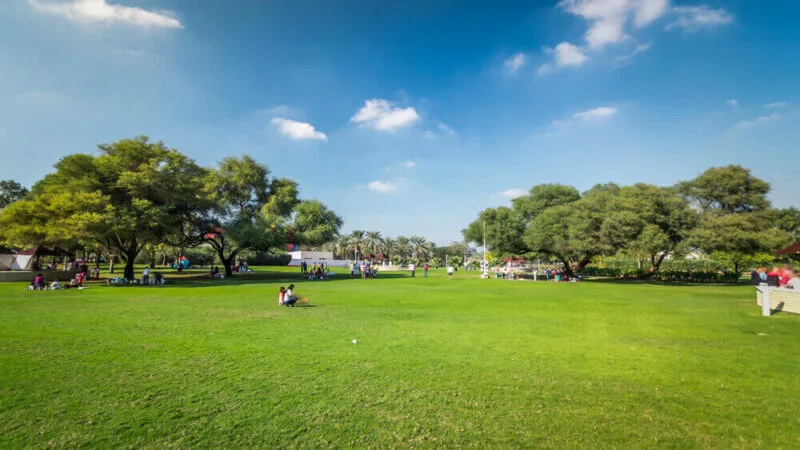
Karama Park Dubai is one of the city’s most used neighborhood parks, yet most tourist guides barely mention it. Tucked into the heart of Al Karama, this small green space sees more daily foot traffic from actual residents than many of Dubai’s larger showcase parks. If you live nearby, or you are simply looking for a quiet, free place to walk, jog, or let the kids play, followed by some of the cheapest and best food in the city, Karama Park Dubai deserves a much closer look than it usually gets. Entry is free, the park never closes, and it sits close enough to a metro station and a stretch of budget restaurants that a short visit can easily turn into a full evening out without needing a car at all.
Karama Park Dubai at a Glance
Karama Park Dubai sits on the junction of 16th Street and 27B Street in the Al Karama district, directly opposite the old Karama branch of the Lulu Hypermarket, which remains the easiest landmark for taxi drivers and first time visitors. The park is rectangular, fully fenced, and flat, covering close to 2.5 hectares, with a paved perimeter track, a large central lawn, and shade from mature ghaf and neem trees over roughly half the grounds.
Unlike Dubai’s larger destination parks such as Zabeel, Creek, or Mushrif, Karama Park Dubai was never designed to pull in visitors from across the city. It was built by Dubai Municipality to serve the streets around it, and that neighborhood focus is exactly what makes it worth understanding properly rather than skimming past. Entry is free, the nearest metro stations are Burjuman and ADCB on the Red Line, and the one thing the park does not have inside its gates is any food or drink stall, which we will come back to later in this guide.
How Karama Park Dubai Came to Be
Al Karama was developed in the early 1970s as Dubai’s population began expanding quickly beyond its original creekside core, and the district’s name comes from the Arabic word for dignity. As Karama filled in with low rise apartment blocks and small businesses over the following decades, Dubai Municipality set aside this plot as one of the neighborhood’s few dedicated green spaces, giving residents somewhere to exercise and gather that did not depend on driving across town.
That history still shapes how the park feels today. It has none of the manufactured, attraction style design of Dubai‘s newer parks, and instead carries the slightly worn, well loved character of a space that has quietly served the same streets for generations. A classic clock feature near one of the entrances is one of the small design touches locals point to as giving the park its identity, alongside the greenery itself and the steady rhythm of people who treat it as an extension of their own front yard.
Timings and Entry Fee
Karama Park Dubai is open to the public 24 hours a day, seven days a week, and entry is completely free with no ticket, booking, or ID check required at any gate. That makes it one of the easiest green spaces in the city to fit into an unplanned evening, since there is no need to check opening hours or buy anything before arriving.
That said, the park has a clear daily rhythm rather than a single busy period. Early mornings, roughly between 6am and 9am, belong to joggers and walking groups getting exercise in before the day heats up. The middle of the day sees the least activity, since open lawn areas with limited shade become uncomfortable once temperatures climb, and most regulars simply avoid that window. The evening stretch from around 5pm to 11pm is when the park is at its busiest, filling up with families, children on the playground equipment, and groups using the basketball court, helped along by floodlighting across the track and lawn that keeps the space usable well after dark.
Occasional exceptions apply during maintenance work, public holidays, or Ramadan, when the usual rhythm shifts slightly, though the park itself does not close for any of these events.
Getting to Karama Park Dubai
By Metro
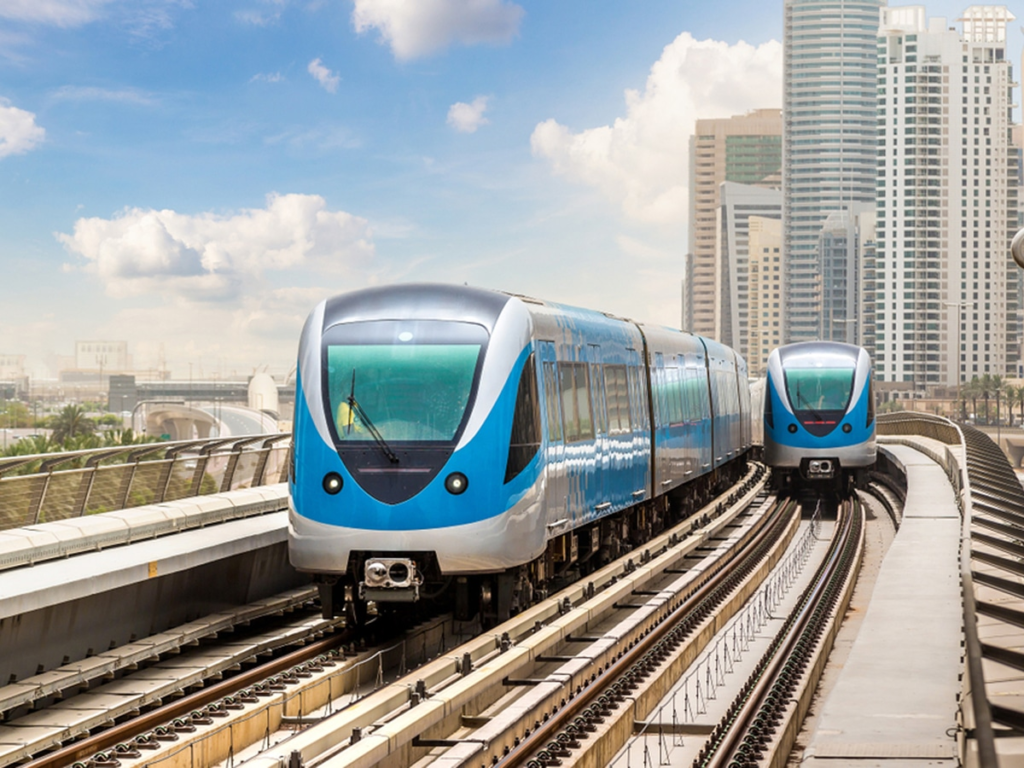
The most convenient way to reach Karama Park Dubai is the Dubai Metro Red Line, getting off at either Burjuman Metro Station or ADCB Metro Station, both roughly a five to ten minute walk from the park, with Burjuman slightly closer to the main entrance near the old Lulu Hypermarket. Every metro passenger needs a Nol card, and a standard Silver Nol card costs AED 25 at the machine, made up of AED 19 of travel credit plus a AED 6 card fee. Fares are then charged by zone, with a journey inside a single zone costing AED 3 on a Silver card, a trip across two adjacent zones costing AED 5, and anything crossing three or more zones costing AED 7.5. Al Karama sits centrally, so most trips from nearby areas like Bur Dubai, Downtown, or Deira cost AED 3 to AED 5 one way, and anyone staying longer than a week may find a 30 day Nol travel pass worthwhile, starting at AED 140 for a single zone on a Silver card.
By Bus
Several RTA bus routes stop close to the park, including 33, 44, 83, C05, C3, and X25, with the 91A route stopping directly outside the gate. Bus fares use the same Nol card and zone system as the metro, so a short ride within Karama’s zone typically costs AED 3 on a Silver card, making the bus a solid backup option for anyone not near a metro line.
By Taxi or Ride Hailing
A taxi from most central Dubai locations, including Downtown Dubai or Dubai Marina, typically costs between AED 20 and AED 50 depending on distance and traffic, while a taxi from nearer areas like Zabeel or Oud Metha usually stays under AED 15. This tends to be the easiest option for visitors travelling with children, groceries, or picnic gear who would rather skip the walk from the metro station.
By Car
The park sits near Sheikh Khalifa Bin Zayed Street, Sheikh Rashid Road, and Zabeel Road, making it reachable within minutes from Bur Dubai, Oud Metha, and Zabeel. Free parking is available on the residential side streets around the park, though paid parking closer to Karama Centre runs roughly AED 2 to AED 4 per hour. Arriving before around 6pm on weekdays or 5pm on weekends makes it noticeably easier to find a spot before the after work crowd arrives and street parking fills up.
What’s Inside the Park
Jogging and Walking Track
A rubberised, paved path loops the entire perimeter of Karama Park Dubai, used heavily by runners at dawn and again by joggers once the evening heat drops. Both the track and the central lawn are floodlit, so the space stays fully usable long after sunset, which is part of why the evening hours draw such a steady stream of regulars.
Playground and Sports Facilities
Dedicated play equipment, including swings and slides, keeps children occupied through the late afternoon and evening, while a basketball court doubles as an informal community hangout most nights. The open lawn supports badminton and cricket along with casual football games, giving the park a genuinely active feel once the sun starts to go down.
Picnic and Seating Areas
The wide central lawn, shaded along its edges, is large enough for spreading a mat and eating an evening meal, while concrete benches line the track and playground for anyone who prefers to sit and watch rather than join in. On weekend evenings, these shaded spots fill up quickly with families settling in for a few hours.
Toilets, Prayer Rooms, and Water Points
Clean toilet facilities sit near the main entrance, and separate prayer rooms for men and women are available a short walk inside the gate, which is a detail many smaller community parks in Dubai skip. Drinking water fountains are positioned near the playground and along the jogging track, so visitors do not need to carry large amounts of water on hot evenings.
Sustainability Features
Parts of Karama Park Dubai run on solar power, lighting throughout the grounds uses high performance bulbs to cut energy use, and an on site recycling center is paired with a smart screen that promotes sustainability awareness to visitors passing by. These touches are easy to miss on a first visit but reflect Dubai Municipality’s broader push to make even small neighborhood parks part of the city’s sustainability efforts.
What You Will Not Find
There is no café, food kiosk, or paid attraction inside Karama Park Dubai. That single gap is the clearest sign the park was built for daily use by locals rather than as a tourist stop, and it is easily solved by the restaurants just outside the gates, covered later in this guide.
A Day in the Life of Karama Park Dubai
Karama Park Dubai does not run on a calendar of organised festivals or ticketed events, and that absence is part of its character. Instead, the park’s rhythm is set by the same routines every day, with morning walking groups, evening basketball games, and family picnics as the sun goes down forming the closest thing it has to a schedule. Local schools occasionally use the grounds for weekday morning sports sessions, adding a burst of activity that regulars quickly learn to expect and plan around.
Ramadan changes the mood noticeably. After iftar, families arrive in larger numbers for post meal walks, and the atmosphere turns gently communal, with more people lingering on the lawn than on an ordinary evening. Around National Day, small informal gatherings with flags sometimes appear, though nothing close to the scale of programming at Dubai’s major parks.
For visitors used to destination parks built around a schedule of events, this can feel like a lack of things to do. For regulars, it is the opposite, since the absence of programming is exactly what keeps the park calm, uncrowded, and genuinely usable for unstructured time.
Where to Eat Near Karama Park Dubai
Food is one of the biggest reasons to plan a trip around Karama Park Dubai rather than just passing through, since Al Karama is widely regarded as one of the cheapest and most diverse places to eat in the entire city. Within a five minute walk of the park, Calicut Paragon, a Kerala restaurant with roots going back to 1939, serves South Indian classics such as prawn moilee with appam. Karachi Darbar is a well known choice for Pakistani biryani and grilled dishes, while Sangeetha is a popular vegetarian spot known for its ghee roast dosa and traditional South Indian thalis.
For something lighter, Al Hara Cafeteria is a neighborhood favourite for tea and quick snacks, especially its well known Disco Chai, and Cafe Calicut Dubai offers a more modern cafe setting overlooking the park itself. On price, a full meal at most small Karama restaurants runs somewhere between AED 15 and AED 25 per person, while multi cuisine spots serving Desi, Filipino, African, or Afghani dishes under one roof typically charge around AED 50 to AED 60 per head for a generous plate. Seafood focused restaurants sit a little higher, closer to AED 90 per person, reflecting fresher catch and larger portions, and for self catering, the Karama Fish Market on 5B Street is worth a look if you want fresh seafood at negotiable prices to cook at home.
The local rule of thumb holds up well here, since the best food in Karama tends to be in the smaller side street restaurants rather than the ones directly on the main road, and a restaurant full of local diners at lunchtime is a more reliable signal of quality than any online rating.
Shopping and Attractions Within Walking Distance
A visit to Karama Park Dubai rarely has to stand alone, since the surrounding streets pack in enough shopping and sightseeing to fill an entire afternoon or evening. Karama Centre, roughly a ten minute walk away, offers fashion outlets, electronics stores, and a Carrefour supermarket under one roof, while Karama Market and the neighbourhood’s textile shops and tailors sit even closer, known across Dubai for bargain shopping if you are comfortable negotiating. Meena Bazaar, about fifteen minutes on foot, adds another dense cluster of shops for anyone extending the trip further.
For something more visual, the murals along 18B Street have turned a stretch of ordinary residential buildings into an open air art gallery, featuring wildlife, abstract designs, and Emirati cultural themes, and it makes for a popular short stop for photos either before or after visiting the park. The Dubai Frame, inside Zabeel Park, sits about a five minute taxi ride or two metro stops away, making it an easy add on for anyone who wants a bigger attraction alongside their neighborhood park visit, with late afternoon into sunset generally recommended for the best photos and cooler weather.
Before You Go: Practical Tips
Visit between October and April for the most comfortable temperatures, and aim for early morning or after 5pm during the hotter months, when the open lawn areas become uncomfortable under direct sun. Bring your own picnic mat or blanket if you plan to sit on the lawn, since shaded, comfortable spots fill up quickly once families start arriving after 6pm on weekends.
Eat before or after your visit rather than during it, since there is no food kiosk inside the park, and the restaurants on the surrounding streets are both cheaper and better than anything a typical park concession stand would offer. Taking the metro over driving is worth considering if you plan to eat afterwards, since paid parking near Karama Centre runs AED 2 to AED 4 an hour and street parking gets difficult once the evening crowd arrives, while a metro fare from most central areas is only AED 3 to AED 5 each way.
Mistakes First Time Visitors Make
Visitors coming from outside Al Karama sometimes treat Karama Park Dubai like a destination attraction rather than the neighborhood park it actually is, and that mismatch causes most of the disappointment in early reviews. The first mistake is arriving at midday expecting shade and activity, since tree cover only reaches about half the grounds, and the stretch between roughly 11am and 3pm during the hotter months is both the least comfortable time to visit and the quietest, as most regulars avoid it too.
The second mistake is expecting food stalls, paid activities, or programmed events, none of which Karama Park Dubai has, so visitors comparing it directly to Zabeel Park or Al Safa Park often come away underwhelmed simply because they walked in with the wrong expectations. The third mistake is skipping the surrounding streets entirely, since many visitors drive straight to the park and back without exploring the nearby restaurants and markets, missing the part of the experience that longtime residents value most, which is the park as one stop in a longer evening out in the neighborhood.
Karama Park Dubai vs Other Dubai Parks
Karama Park Dubai is easiest to understand next to the parks it is most often compared with. Zabeel Park, home to the Dubai Frame, is many times larger, charges a small entry fee for some sections, and draws visitors from across the city rather than just the surrounding streets. Al Twar Pond Park, another neighborhood option, offers a pond and slightly more open picnic space but sits further from a central metro line.
Against both, Karama Park Dubai wins on convenience rather than scale. It has no entry fee, no crowds bussed in from elsewhere, and a location that puts a metro station, dozens of budget restaurants, and a busy shopping street all within a ten minute walk. For a short evening visit, a quick jog, or a family outing that will end with dinner nearby, that convenience matters more than acreage.
Frequently Asked Questions
Is Karama Park Dubai free to enter?
Yes, entry is completely free with no ticket or booking required at any time.
What are the timings of Karama Park Dubai?
The park is open 24 hours a day, though it is busiest in the early morning and again in the evening from around 5pm to 11pm.
How much does it cost to get to Karama Park Dubai by metro?
A single metro journey to Burjuman or ADCB Station typically costs AED 3 to AED 5 on a Silver Nol card, depending on how many zones you cross, plus the one time AED 25 cost of the Nol card itself if you do not already have one.
Is there food available inside Karama Park Dubai?
No, there is no café or food kiosk inside the park, but budget restaurants serving Kerala, Pakistani, and South Indian food are within a five minute walk on the surrounding streets.
Is Karama Park Dubai suitable for children?
Yes, the park includes dedicated playgrounds with swings and slides along with open, fenced grassy areas that are considered safe for children.
Does Karama Park Dubai have parking?
Yes, free parking is available on the residential side streets around the park, while paid parking closer to Karama Centre runs roughly AED 2 to AED 4 per hour.
How is Karama Park Dubai different from Zabeel Park?
Karama Park Dubai is a small, free community park with no food stalls or paid attractions, while Zabeel Park is a much larger destination park with the Dubai Frame, paid activities, and facilities that draw visitors from across the city.
Can I play sports at Karama Park Dubai?
Yes, the park has facilities for badminton, cricket, and basketball, along with a running and biking trail around its perimeter.
Does Karama Park Dubai host events?
Not in the organised sense. The park has no regular festivals or ticketed events, though it takes on a busier, more communal feel after iftar during Ramadan and sees small informal gatherings around National Day.
What is the best time of year to visit Karama Park Dubai?
October through April offers the most comfortable temperatures, with early morning or evening visits recommended year round to avoid the midday heat.
Conclusion
Karama Park Dubai will never compete with the city’s headline attractions in size or spectacle, and that is exactly the point. It is a free, round the clock, well maintained community park surrounded by some of the cheapest and most diverse food in Dubai, giving Al Karama’s residents and visitors alike a reliable place to walk, play, eat well, and gather every single day of the year.
Before heading out, keep three things in mind: take the metro to Burjuman or ADCB for AED 3 to 5 each way, eat at one of Al Karama’s budget restaurants since there is no food inside the park, and consider combining your trip with a walk to Karama Market, the 18B Street murals, or a quick ride to the Dubai Frame.
