

Introduction
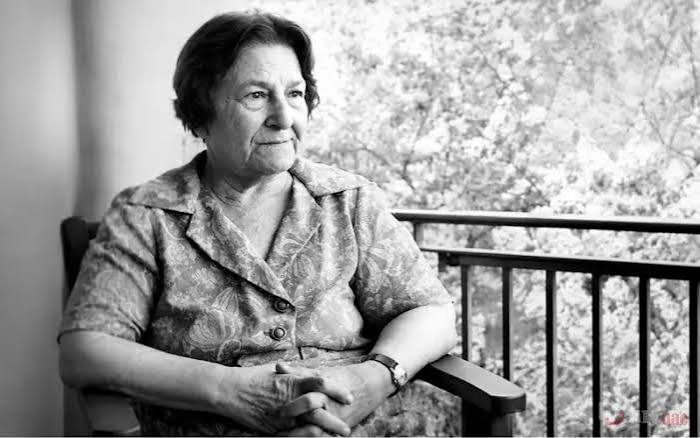
Dr. Saniya Habboub was a pioneering Lebanese physician whose career became an important chapter in the history of women in Arab medicine. She is particularly remembered for becoming the first Lebanese woman to study medicine overseas, obtaining her medical degree in the United States, returning to Beirut and establishing an independent medical practice at a time when professional medicine was overwhelmingly dominated by men.
A clarification is important for readers searching for “Dr. Saniya Habboub in Dubai.” Saniya Habboub was not a Dubai-based doctor and did not establish her medical career in Dubai. Her documented life and professional work were centred primarily in Beirut, Lebanon, although her story has broader significance across the Arab world, including the UAE and Dubai, because of her pioneering role in women’s education and medicine.
As of 2026, there is no reliable evidence from major institutional sources that she practised medicine in Dubai or operated a clinic there. Recent online pages sometimes incorrectly frame her as a Dubai or UAE medical professional. Those claims should not be confused with the historical record. The Lebanese American University, which traces its institutional history to the American Junior College for Women where Habboub studied, provides detailed documentation of her education and career.
Who Was Dr. Saniya Habboub?
Saniya Moustafa Habboub, also known as Saniya Habboub al-Naqqash, was a Lebanese physician born in Beirut in 1901. She became one of the most significant female medical pioneers in Lebanon during the first half of the 20th century.
Her importance goes beyond simply being an early female doctor. Habboub challenged social expectations surrounding women’s education, travelled abroad independently to obtain medical training, established her own medical practice and spent decades providing healthcare to women, including patients who could not afford treatment.
The Lebanese American University identifies her as one of the pioneering graduates of the institution’s predecessor, the American Junior College for Women (AJCW). In 1926, Habboub was among the first three students to graduate from the newly established women’s college.
Her subsequent decision to pursue medicine made her an important figure in the history of women’s professional education in the region.
Early Life and Family Background
Habboub was born in Beirut into a family that placed considerable value on education. Her father, Mustafa Habboub, was involved in the leather business, while her mother, Adla al-Jazairy, was a Turkish woman who herself had not received a formal education.
According to the Lebanese American University’s historical account, her mother’s attitude toward education had a profound influence on Saniya. Adla reportedly became determined that her daughters should receive an education after seeing a woman reading a newspaper during a journey from Istanbul to Beirut.
Habboub grew up in an environment where education was encouraged despite the social restrictions faced by women at the time. She attended the American School for Girls in Beirut before continuing her education at the American Junior College for Women.
Her early education was particularly significant because access to advanced education for women in the region was still limited.
Education at the American Junior College for Women
In 1924, Habboub joined the inaugural freshman class of the American Junior College for Women, an institution that later became part of the history of the Lebanese American University.
She graduated in 1926, together with Munira Barbir and Armenouhi Mugrditchian. The institution’s historical records identify these three women as members of its first graduating class.
Habboub wanted to continue studying medicine. Her original plan was to study at the American University of Beirut (AUB). However, the social environment and institutional circumstances of the period prevented her from pursuing the medical education she wanted there.
Rather than abandoning medicine, she searched for another route.
Why Did Saniya Habboub Study Medicine in the United States?
The decision to travel to the United States was extraordinary for a Lebanese woman during the 1920s.
Habboub eventually learned about medical education in the United States and decided that America offered the opportunity she needed to become a physician. With the support of her parents, she travelled by ship to the United States in 1926.
The journey itself demonstrated the determination required to pursue higher education at that time. She travelled without the conventional family arrangements that normally accompanied women undertaking such journeys.
Her decision ultimately placed her among the first Lebanese women to obtain medical education abroad.
Medical Education in the United States
Habboub studied medicine in the United States and received her medical degree from Western College in Cincinnati, Ohio, in 1931, according to the Lebanese American University’s historical account.
She then continued her medical training at the Woman’s Medical College of Pennsylvania in Philadelphia, where she completed additional specialization in obstetrics and gynecology.
Her graduation from medical school on June 10, 1931, later became the date associated with her recognition by Google.
Her achievements attracted attention because she was one of the very few Arab women pursuing medical education in the United States at that time. Historical records describe her as the first Arab graduate of the Woman’s Medical College of Pennsylvania.
The college also invited the renowned historian and Princeton professor Philip Hitti to deliver the commencement speech at her graduation, highlighting the importance of her achievement.
Scholarship and Contribution to Medical Education
Habboub did not forget the institution that had helped her achieve her medical ambitions.
As a gesture of gratitude, she established a scholarship connected with her medical college. This allowed future students to benefit from educational opportunities similar to those that had enabled her own career.
Her approach to education therefore extended beyond her personal achievement. She viewed education as something that could create opportunities for subsequent generations.
Return to Lebanon
After completing her medical education and training in the United States, Habboub returned to Lebanon.
Her return was particularly significant because she did not simply seek employment in an established institution. She established her own practice in Bab Idriss, Beirut, in 1933, according to the Lebanese American University’s detailed biography.
At the time, social expectations often required women doctors to work under the supervision or alongside male physicians.
Habboub rejected this limitation and established an independent practice focused on obstetrics and general medicine.
This made her a pioneering example of a woman operating an independent medical practice in Beirut.
Her Medical Practice in Beirut
Habboub’s clinic became an important part of her professional life.
Her patients came from different sections of Beirut, and she eventually developed a reputation that extended beyond the boundaries of her immediate neighbourhood.
According to her family history recorded by LAU, some patients initially assumed that she was a midwife rather than a physician. However, as more women sought her services, her reputation grew. She reportedly worked extremely long hours to meet the needs of her patients.
Her work was especially important for women because female patients could often feel more comfortable receiving medical and obstetric care from another woman.
Free Medical Care for Underprivileged Women
One of the most important aspects of Habboub’s career was her commitment to patients who could not afford medical treatment.
For approximately 50 years, she provided free medical treatment to underprivileged women and also made home visits.
This transformed her work from a conventional medical career into a form of community service.
Her medical practice therefore combined professional medicine with social responsibility. She did not limit her work to patients who could pay.
Work With the Lebanese Red Cross
Habboub was also involved in humanitarian and community organizations.
She became one of the founding members of the Lebanese Red Cross and participated in other organizations serving women and vulnerable communities. Her documented affiliations included the Muslim Orphanage and the Young Women’s Muslim Association. She also served as a school doctor at her former school.
Her involvement demonstrates that her contribution to healthcare extended beyond private clinical practice.
She regarded medicine as a means of serving the wider community.
Marriage and Family
In 1937, Habboub married Muhammad al-Naqqash, a journalist who had interviewed her after she became known for her medical work. He was younger than Habboub, which itself represented another departure from some conventional social expectations of the period.
The couple had two daughters, Saniya Ellen and Iffat Elizabeth.
Habboub’s approach to family life also reflected her belief in personal independence. Her daughters were allowed to make their own educational and professional decisions rather than being forced into a particular path.
Her Views on Women’s Education
Habboub’s legacy was not limited to medicine. She was also a strong advocate of women’s education.
Her life demonstrated a direct connection between education and independence: she had experienced social resistance herself, yet continued studying until she became a qualified physician.
She later expressed the view that education and determination were central to women’s progress. Her example encouraged other Lebanese women to pursue higher education instead of being restricted to traditional expectations.
This aspect of her legacy remains relevant to discussions about women’s participation in medicine across the Middle East.
Retirement and Final Years
Habboub retired from medical practice in 1965. Her professional career had lasted for several decades and included private medical practice, community service, home visits and organizational work.
Her clinic was later looted during the Lebanese Civil War, which began in 1975. Many of her professional possessions and documents were lost.
Among the items that survived were her stethoscope and one of her diplomas, according to the family account published by LAU.
Habboub died in 1983 at the age of 82.
Health Medal of Merit
In 1982, shortly before her death, the Lebanese government recognized Habboub’s approximately five decades of medical service by awarding her the Health Medal of Merit.
The award was an official recognition of a career that had combined medicine, humanitarian work and service to women.
A street in Beirut was also named in her honour, further establishing her place in the city’s history.
Google Doodle Recognition
One of the most visible modern recognitions of Saniya Habboub came from Google.
On June 10, 2022, Google featured Habboub in a regional Google Doodle commemorating the anniversary of her medical graduation in 1931. The recognition brought her story to a much wider audience across the Middle East and beyond.
The Google Doodle was significant because it introduced a historical female medical pioneer to a contemporary digital audience.
It also reinforced the fact that Habboub’s importance is not restricted to Lebanese history. Her story forms part of the broader history of Arab women entering professional education and medicine.
Why Is Dr. Saniya Habboub Relevant to Dubai and the UAE?
Although Habboub did not practise in Dubai, her story is relevant to audiences in the UAE because Dubai and the wider UAE have become major centres for women’s education, healthcare and professional development.
It would therefore be inaccurate to describe her as a Dubai doctor. A more accurate description is that Dr. Saniya Habboub was a Lebanese medical pioneer whose achievements have relevance across the Arab world, including the UAE.
Modern discussions of women in medicine in the Middle East frequently look back at pioneers such as Habboub to understand how access to medical education and professional practice evolved.
A 2026 peer-reviewed article on the history of women in medicine in Lebanon continues to identify Habboub as an important early figure in the country’s medical history, demonstrating that her contribution remains relevant in contemporary academic discussions.
What Makes Her Legacy Important?
There are several reasons Habboub remains historically significant.
She Challenged Educational Barriers
She pursued medical education despite social resistance and the limitations placed on women in medical education during her era.
She Studied Abroad
She became the first Lebanese woman to study medicine overseas, creating an educational path that later generations could follow.
She Established an Independent Practice
Rather than allowing social restrictions to determine her career, she established her own medical practice in Beirut.
She Served Women Who Could Not Pay
Her long-term provision of free medical care demonstrated a strong commitment to public service.
She Supported Women’s Education
Her own life became evidence of the transformative power of education, and she actively encouraged women to pursue higher education.
She Contributed to Humanitarian Work
Her involvement with the Lebanese Red Cross and other community organizations extended her influence beyond private medical practice.
Frequently Asked Questions
Was Dr. Saniya Habboub a doctor in Dubai?
No. There is no reliable historical evidence that Dr. Saniya Habboub practised medicine in Dubai. Her documented medical career was primarily in Beirut, Lebanon.
What was Saniya Habboub famous for?
She is best known as a pioneering Lebanese physician and the first Lebanese woman to study medicine abroad. She later established an independent medical practice in Beirut.
Where did she study medicine?
She studied medicine in the United States, receiving her medical degree from Western College in Cincinnati and subsequently undertaking specialization in obstetrics and gynecology at the Woman’s Medical College of Pennsylvania.
When did she graduate from medical school?
She received her medical degree in 1931, with June 10, 1931, marking her medical graduation date.
Where did she practise?
After returning to Lebanon, she established her medical practice in Bab Idriss, Beirut, where she worked in obstetrics and general medicine.
Did she provide free medical treatment?
Yes. Historical accounts state that she treated underprivileged women without charge for approximately 50 years and also made home visits.
When did she die?
Saniya Habboub died in 1983, aged 82.
Conclusion
Dr. Saniya Habboub was a genuine pioneer whose significance extends far beyond the title of “first Lebanese woman to study medicine abroad.” She challenged restrictions on women’s education, travelled to the United States to obtain medical training, specialized in obstetrics and gynecology, returned to Beirut and established an independent medical practice.
Her contribution was also humanitarian. For decades she treated underprivileged women without charge, made home visits and participated in organizations including the Lebanese Red Cross. The Lebanese government recognized her decades of service with the Health Medal of Merit in 1982.
For readers in Dubai or the UAE, the most important factual clarification is that Habboub should not be presented as a Dubai physician. She was a Lebanese medical pioneer whose historical influence belongs primarily to Lebanon but whose example has significance throughout the Arab world.
Her story remains relevant in 2026 because the questions she confronted—women’s access to education, professional independence, healthcare for disadvantaged communities and women’s participation in medicine—continue to shape discussions about healthcare and education across the Middle East. Her recognition by Google in 2022 and continued discussion in contemporary academic literature demonstrate that her contribution has not disappeared from the historical record.
