
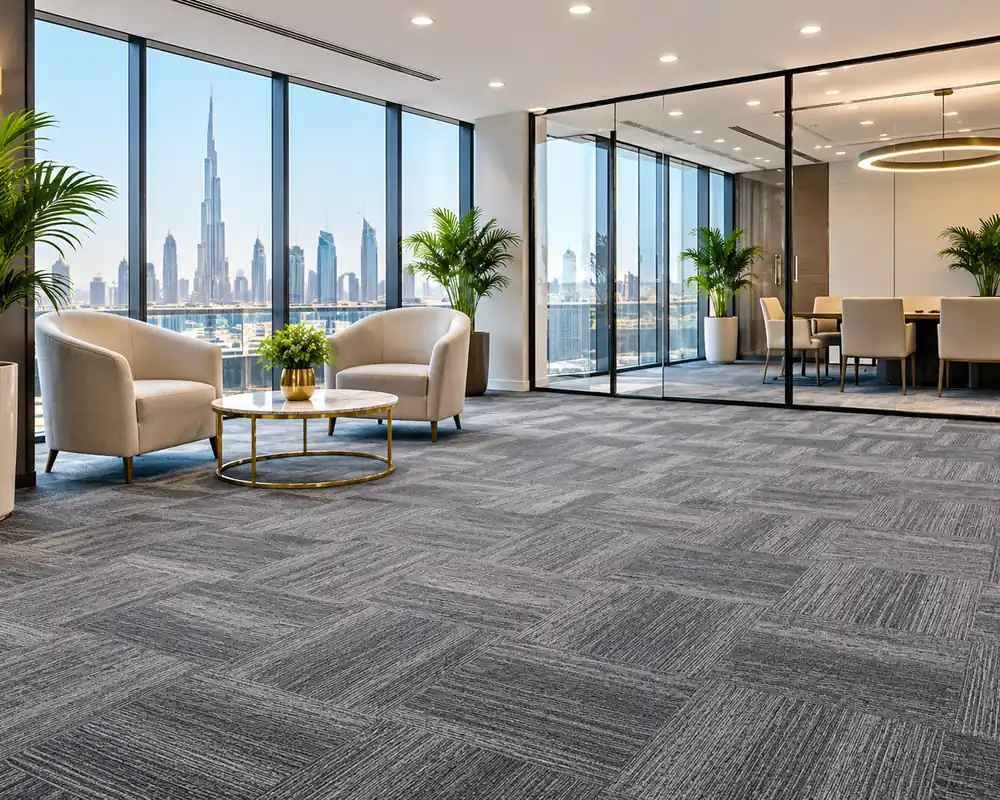
Heavy foot traffic, distracting noise, frequent maintenance and premature flooring wear are common challenges in commercial environments. Choosing an unsuitable carpet can lead to higher replacement costs, reduced workplace comfort and an unprofessional appearance, regardless of how well the rest of the interior is designed.
In Dubai, where corporate offices, luxury hotels, retail outlets and business centres prioritise both functionality and aesthetics, carpet flooring plays an important role in creating welcoming and productive environments. The right carpet can improve acoustic comfort, complement corporate branding and withstand the demands of daily commercial activities.
Businesses looking to buy Carpets Dubai for their offices and commercial spaces should prioritise material quality, pile construction, durability and ease of maintenance alongside colours and patterns. Investing in the right carpet ensures it meets daily operational demands while maintaining a professional appearance and delivering long-term value.
From modular carpet tiles to premium wall-to-wall carpeting, understanding the available options helps business owners, architects and facility managers make informed flooring decisions.
1. Best Types of Carpets for Offices and Commercial Spaces
Commercial carpets are available in different formats, each designed to accommodate specific functional and aesthetic requirements.
Carpet Tiles – Ideal for Modern Workplaces
Carpet tiles are individual modular sections that can be arranged in different layouts, making them a practical choice for contemporary commercial interiors.
Their key advantages include:
- Individual replacement of damaged or stained tiles.
- Flexible installation around office furniture.
- Custom patterns and colour combinations.
- Convenient access to raised flooring systems when installed appropriately.
- Reduced disruption during localised flooring repairs.
Carpet tiles are particularly suitable for open-plan offices, coworking spaces, call centres and corporate buildings.
Wall-to-Wall Carpets – For a Seamless Premium Finish
For businesses seeking a seamless and sophisticated flooring solution, wall to wall carpets Dubai offer excellent continuous floor coverage. Their uninterrupted finish creates a cohesive appearance, making them particularly suitable for executive offices, luxury hotels and commercial interiors where visual consistency and comfort are essential.
This carpet format is particularly suitable for executive offices, hotel suites, conference rooms, luxury showrooms and hospitality environments.
Low-Pile Commercial Carpets – For High-Traffic Areas
Low-pile carpets feature short fibres that create a relatively firm and compact surface. Their construction makes them easier to maintain and more suitable for frequent movement than many deep-pile alternatives.
They work particularly well in busy corridors, educational facilities, administrative offices and commercial reception areas.
Custom-Printed Carpets – For Distinctive Commercial Interiors
Custom-printed carpets allow businesses to incorporate corporate colours, logos, geometric patterns and exclusive designs into their flooring.
They are particularly useful in branded reception areas, exhibition spaces, luxury hotels and commercial environments seeking a distinctive visual identity.
Entrance and Barrier Carpets – For Dirt and Dust Control
Dubai’s dusty outdoor conditions make entrance carpeting an important consideration for commercial buildings. Specialised barrier carpets help capture dirt, dust and moisture before they reach internal flooring.
Installing suitable entrance matting can reduce cleaning demands and protect surrounding carpeted areas from premature deterioration.
2. Best Carpet Materials for Commercial Use
Fibre selection directly influences a carpet’s durability, appearance retention, stain resistance and long-term maintenance costs.
| Carpet Material | Key Characteristics | Best Applications |
| Nylon | Resilient, durable and abrasion-resistant | Busy offices and corridors |
| Polypropylene | Moisture-resistant and economical | Budget-conscious commercial spaces |
| Polyester | Soft texture and good colour retention | Lower-traffic offices and lounges |
| Wool | Natural, comfortable and luxurious | Executive offices and premium hotels |
| Wool blends | Combines natural luxury with synthetic performance | Hospitality and corporate interiors |
| Solution-dyed nylon | Strong colourfastness and good stain resistance | High-traffic commercial facilities |
Nylon and solution-dyed nylon are particularly suitable for demanding workplaces, while wool and wool blends provide a more refined appearance in premium commercial settings.
The final selection should also consider carpet construction, backing quality and manufacturer performance ratings rather than fibre type alone.
3. Understanding Carpet Pile and Construction
Carpet construction determines how the surface responds to foot traffic, office furniture and regular cleaning.
Loop Pile Carpets
Loop pile carpets feature uncut fibre loops that create a structured surface. Commercial-grade loop pile designs generally offer good appearance retention and resistance to crushing.
They are suitable for busy workstations, corridors and shared office spaces.
Cut Pile Carpets
Cut pile carpets feature individual fibre ends that provide a softer and more luxurious finish. Their performance varies depending on fibre density, twist and construction quality.
They are commonly used in executive cabins, hotel rooms and formal meeting areas.
Cut-and-Loop Carpets
Combining cut and loop fibres creates distinctive textures and decorative patterns. These carpets offer greater design flexibility for commercial interiors where visual character is a priority.
Carpet Density
A densely constructed carpet can provide better resistance to compression and wear. Businesses should evaluate density alongside fibre quality, pile height and commercial-use classifications.
4. Choosing Carpets for Different Commercial Spaces
Different commercial environments require flooring that reflects their operational demands and interior design objectives.
| Commercial Space | Recommended Carpet | Primary Requirement |
| Corporate offices | Modular nylon carpet tiles | Durability and flexibility |
| Executive cabins | Wool-blend carpets | Premium appearance |
| Conference rooms | Acoustic carpet tiles | Noise reduction |
| Reception areas | Patterned commercial carpets | Professional first impression |
| Hotels | Commercial wall-to-wall carpets | Luxury and guest comfort |
| Retail showrooms | Dense low-pile carpets | Traffic resistance |
| Coworking spaces | Modular carpet tiles | Flexible layouts |
| Educational facilities | Heavy-duty commercial carpets | Maintenance and durability |
| Commercial corridors | Solution-dyed nylon carpets | Appearance retention |
| Building entrances | Barrier carpets | Dust and dirt control |
Selecting flooring according to the function of each area allows businesses to allocate their budget more effectively without compromising overall design consistency.
5. Essential Features to Look for in Commercial Carpets
Before purchasing carpet flooring for a commercial property, businesses should evaluate the following performance characteristics.
- Commercial traffic rating: Select carpets specifically designed for the expected intensity of pedestrian movement.
- Stain resistance: Choose fibres and finishes that simplify the removal of everyday spills and marks.
- Fire performance: Ensure the carpet meets applicable fire safety requirements for the building and intended use.
- Slip resistance: Consider surface stability, secure installation and safe transitions between flooring materials.
- Static control: Evaluate antistatic properties for environments containing sensitive electronic equipment.
- Castor chair resistance: Choose products tested for repeated movement of wheeled office chairs where required.
- Colourfastness: Consider resistance to fading caused by sunlight, cleaning and prolonged use.
- Indoor air quality: Look for low-VOC carpets, adhesives and underlay systems where appropriate.
Reviewing manufacturer technical specifications before purchasing helps ensure that the selected flooring is suitable for its intended commercial application.
6. How Commercial Carpets Improve Workplace Acoustics
Noise management is particularly important in open-plan offices, meeting rooms and customer-facing environments.
Hard flooring surfaces can reflect sound, while carpets help absorb certain frequencies and reduce impact noise caused by footsteps and furniture movement.
Appropriately selected acoustic carpets can contribute to:
- Reduced footstep noise.
- Improved acoustic comfort in shared workspaces.
- Fewer distractions caused by movement.
- More comfortable meeting and reception environments.
- Reduced impact sound transmission through floor assemblies.
Carpets with specialised acoustic backing can provide additional benefits. However, flooring should form part of a broader acoustic strategy that may also include ceiling panels, partitions and wall treatments.
7. Best Carpet Colours and Patterns for Commercial Interiors
Carpet colours influence how a workplace is perceived and how easily its flooring maintains a clean appearance.
Popular commercial colour choices include:
- Charcoal grey: Creates a professional, contemporary appearance.
- Navy blue: Complements formal corporate interiors.
- Beige and taupe: Introduces warmth into hospitality and executive spaces.
- Dark brown: Coordinates with traditional furniture and wooden finishes.
- Muted green: Complements nature-inspired workplace designs.
- Multitone grey: Helps disguise minor marks and everyday soiling.
- Geometric patterns: Introduces visual character into creative workplaces.
Subtle patterns and multitone designs are particularly practical for busy commercial environments because they can make minor surface marks less noticeable between cleaning sessions.
Businesses can also use contrasting carpet colours to visually distinguish workstations, meeting areas, breakout zones and circulation paths.
8. Carpet Tiles vs Wall-to-Wall Carpets for Commercial Projects
Both flooring formats offer distinct advantages depending on the property’s layout and maintenance strategy.
| Feature | Carpet Tiles | Wall-to-Wall Carpets |
| Installation | Modular sections | Continuous broadloom rolls |
| Localised replacement | Relatively easy | More complex |
| Design flexibility | High | Depends on selected design |
| Visual finish | Modular appearance | Seamless appearance |
| Maintenance strategy | Individual tile replacement | Larger-section repairs may be required |
| Office reconfiguration | Highly suitable | Less flexible |
| Ideal application | Corporate workplaces | Hotels and premium interiors |
Carpet tiles are generally more practical for workplaces that undergo frequent layout changes, whereas wall-to-wall carpeting is well suited to environments that prioritise visual continuity and luxury.
9. Selecting Commercial Carpets for Dubai’s Climate
Dubai’s environmental conditions present specific flooring challenges, particularly in buildings exposed to outdoor dust, intense sunlight and frequent visitor movement.
Commercial property owners should consider:
- Installing effective entrance matting to minimise dust transfer.
- Selecting colourfast fibres for areas exposed to direct sunlight.
- Choosing materials compatible with the building’s cleaning procedures.
- Checking subfloor moisture levels before installation.
- Allowing materials to acclimatise according to manufacturer instructions.
- Maintaining suitable indoor temperature and humidity conditions.
These precautions can help preserve the carpet’s structural integrity and appearance throughout its service life.
10. Importance of Professional Carpet Installation
Even high-quality commercial carpets can develop visible seams, uneven surfaces, loose edges and premature wear when installed incorrectly.
A professional commercial carpet installation generally involves the following stages:
- Site inspection: Evaluating the floor condition, measurements and installation requirements.
- Subfloor preparation: Cleaning, levelling and checking moisture conditions.
- Layout planning: Establishing carpet direction, seams, patterns and material requirements.
- Carpet fitting: Installing the selected carpet using a manufacturer-approved method.
- Finishing: Securing edges, transitions and adjoining flooring connections.
- Quality inspection: Checking alignment, adhesion, surface consistency and overall workmanship.
For operational businesses, phased or after-hours installation can help minimise disruption to employees and customers.
11. Commercial Carpet Cleaning and Maintenance
A structured maintenance programme helps extend carpet lifespan and maintain a professional environment.
| Maintenance Activity | Recommended Frequency |
| Vacuuming high-traffic areas | Daily |
| Vacuuming lower-traffic areas | According to usage |
| Spot and spill treatment | Immediately |
| Entrance mat cleaning | Daily or as required |
| Interim carpet cleaning | Based on soiling levels |
| Professional deep cleaning | According to traffic and manufacturer guidance |
| Carpet condition inspection | Periodically |
Using appropriate cleaning products is essential because unsuitable chemicals or excessive moisture can damage fibres, backing materials and adhesives.
Facility managers should establish a maintenance schedule based on actual foot traffic rather than applying the same cleaning routine to every area.
12. Sustainable Carpet Options for Commercial Properties
Businesses increasingly consider environmental performance when selecting interior materials. Sustainable commercial carpets can support broader environmental objectives without necessarily compromising functionality.
Features worth evaluating include:
- Recycled fibre content.
- Recyclable carpet backing.
- Low-VOC materials and adhesives.
- Manufacturer take-back or recycling programmes.
- Environmental Product Declarations (EPDs).
- Long-lasting and replaceable modular designs.
Commercial projects pursuing green building certifications may also consider documented carpet environmental performance when selecting materials.
13. How Much Do Commercial Carpets Cost in Dubai?
The total cost of commercial carpeting depends on the project’s technical requirements rather than material price alone.
Factors influencing the overall investment include:
- Carpet fibre and construction quality.
- Total flooring area.
- Commercial performance specifications.
- Custom colours, patterns and branding.
- Acoustic backing or underlay requirements.
- Subfloor preparation.
- Removal of existing flooring.
- Installation complexity and labour.
Businesses should evaluate the total lifecycle cost, including initial purchase, installation, cleaning, repairs and eventual replacement.
A carpet with a higher initial price may offer better long-term value if it provides greater durability and requires fewer replacements.
14. How to Choose a Reliable Commercial Carpet Supplier in Dubai
Selecting a suitable supplier is as important as choosing the carpet itself. An experienced supplier should understand the flooring requirements of different commercial environments and provide appropriate product recommendations.
Before finalising a supplier, consider their:
- Commercial carpet installation experience.
- Portfolio of completed projects.
- Availability of physical material samples.
- Product technical specifications and test documentation.
- Customisation capabilities.
- Transparent quotations.
- Product and installation warranties.
- After-sales support and maintenance guidance.
Requesting samples and reviewing them under the property’s actual lighting conditions can help prevent unexpected differences in colour and texture.
Frequently Asked Questions
Which carpet is best for commercial offices in Dubai?
Commercial-grade nylon carpet tiles are an excellent option for many offices because of their durability, modular construction and convenient replacement.
What carpet is best for high-traffic commercial areas?
Dense, low-pile commercial carpets made from resilient fibres such as solution-dyed nylon are suitable for demanding, high-traffic environments.
How long do commercial carpets last?
Commercial carpets can last approximately 5–15 years or longer, depending on material quality, traffic intensity, installation standards and maintenance practices.
Are carpet tiles suitable for office chairs?
Yes, provided they are specifically rated for repeated castor chair use. Low-pile, densely constructed carpet tiles are generally more suitable for wheeled office furniture.
Are commercial carpets suitable for reducing office noise?
Yes. Commercial carpets can reduce footstep and impact noise while contributing to improved acoustic comfort within shared workspaces.
Can commercial carpets be customised with company logos?
Yes. Custom-printed and specially manufactured carpets can incorporate corporate logos, brand colours and exclusive patterns.
Are carpets suitable for Dubai’s commercial buildings?
Yes. With appropriate material selection, entrance matting, professional installation and regular maintenance, carpets can perform effectively in Dubai’s commercial environments.
Conclusion
Choosing the best carpets for offices and commercial spaces in Dubai requires a careful balance of durability, comfort, aesthetics, safety and long-term value. While modular carpet tiles offer flexibility for dynamic workplaces, wall-to-wall carpets deliver a sophisticated finish for executive and hospitality interiors.
By evaluating fibre quality, commercial performance ratings, installation methods and lifecycle costs, businesses can invest in flooring that supports their daily operations and strengthens their professional image.
Ultimately, a well-selected commercial carpet is more than a decorative feature. It is a practical investment that contributes to workplace comfort, brand presentation and the long-term functionality of a commercial property.