
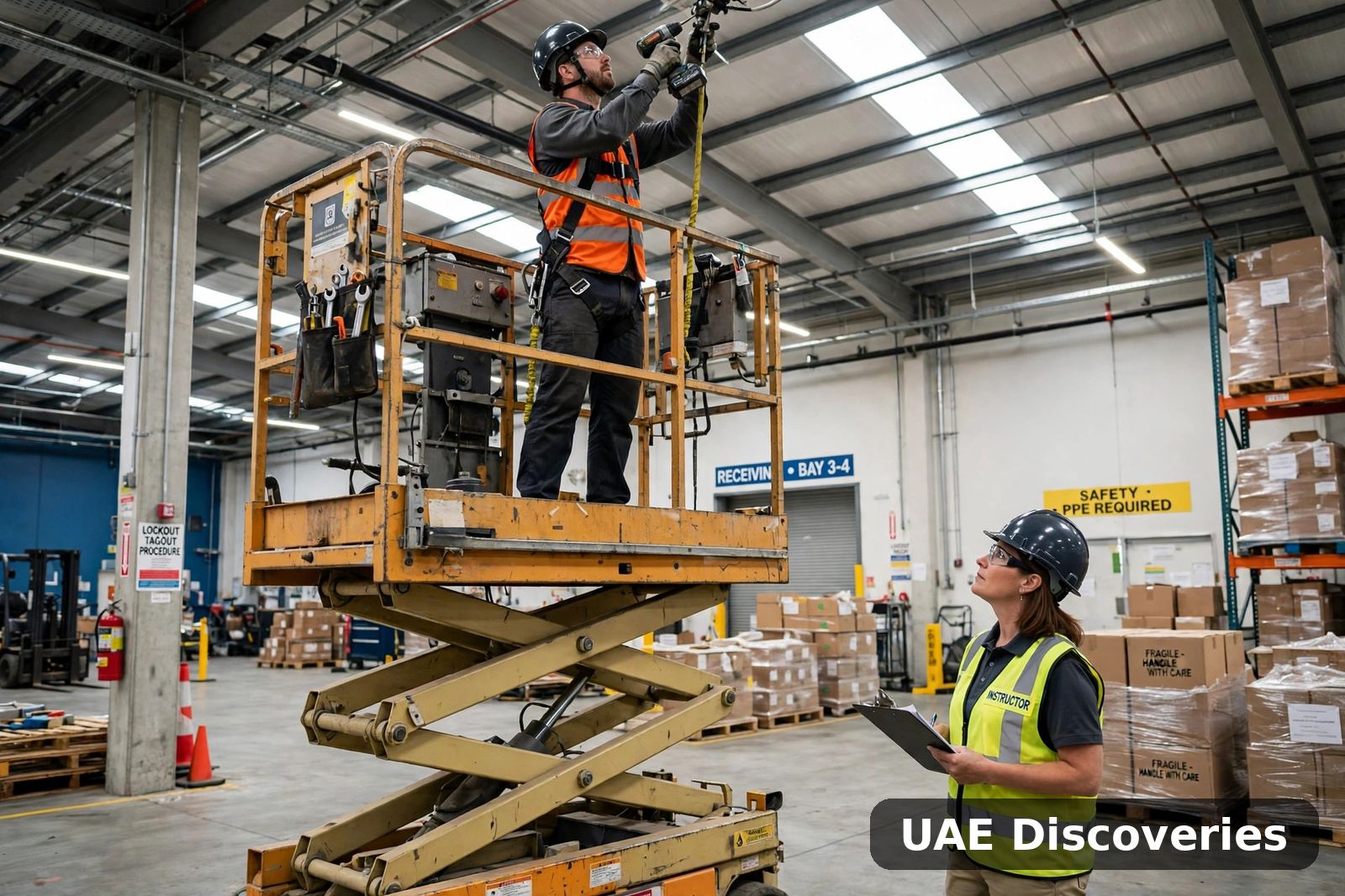
Working at height from a powered platform leaves no room for guesswork. This ipaf training guide explains the machine categories, what the operator course involves, and how the PAL Card proves you have been trained and tested.
IPAF training is the recognised standard for people who operate mobile elevating work platforms, often called MEWPs. It is delivered only by approved training centres using certified instructors and a set syllabus.
Whether you hire scissor lifts for warehouse work or run booms on construction sites, the right category on your card matters. This guide walks through each step, from choosing a category to renewing your card.
What Is IPAF Training?
IPAF is the International Powered Access Federation, the body that promotes the safe and effective use of powered access worldwide. Its training programme sets the standard most employers and sites ask for.
The operator course teaches you to prepare, operate and shut down a platform safely. It covers pre-use inspections, hazard awareness, emergency lowering and the limits of the machine you are using.
Training follows the international standard for MEWP operator training. Completing it does not just earn a card; it gives operators a shared, recognised way of working that site managers can trust.
MEWP Categories Explained: 1a, 1b, 3a and 3b
IPAF certifies operators by machine category, and your card only covers the categories you passed. The four main operator categories are grouped by whether the machine is static or mobile.
- 1a Static Vertical: personnel lifts that rise straight up and stay in one position while in use.
- 1b Static Boom: trailer-mounted or vehicle-mounted booms that are set up and stabilised before use.
- 3a Mobile Vertical: scissor lifts and mobile vertical platforms that can be driven while elevated.
- 3b Mobile Boom: self-propelled boom lifts that can travel and reach up and over obstacles.
A card for one category does not automatically cover another. Being passed on a scissor lift does not qualify you to operate a boom lift, even if both machines look familiar.
Which Category Do You Need?
Start from the machine you will actually use at work. Most warehouse and facilities operators need 3a for scissor lifts, while construction and maintenance work often calls for 3b as well.
Many operators take 3a and 3b together, because the two machine types appear side by side on most sites. Adding a category later means another course and another assessment.
If you are unsure, describe your typical jobs to an approved centre before booking. You can find centres through the IPAF-approved training centres before you commit to a date.
What the Operator Course Involves
An operator course usually lasts about one day for a single category, and longer when categories are combined. Class sizes are kept small so instructors can observe every candidate properly.
The day mixes theory with hands-on practice. You learn the relevant regulations and guidance, the parts of the machine, safe operating methods, and what to do when something goes wrong.
You then complete a written or online theory test and a practical assessment on the machine. Both parts must be passed before any card is issued.
Theory, eLearning and the Practical Test
IPAF offers the operator theory as eLearning, which takes a few hours and can be completed at your own pace before attending a centre. The practical assessment still happens in person.
eLearning suits experienced operators refreshing knowledge, while classroom theory suits complete beginners who benefit from asking questions. Either way, the standard you must reach is exactly the same.
Whichever route you choose, check the official course listing for current formats, because delivery options and requirements can change over time.
The PAL Card: What It Proves
Pass the course and you receive a PAL Card, the Powered Access Licence. It shows your photograph, your identity details and the machine categories you are qualified to operate.
Cards are now issued digitally through the IPAF ePAL app, with a physical card available if you need one. Site managers can check a card’s validity quickly.
The card is recognised internationally and is the proof most sites ask for at the gate. Keep it accessible, because working without evidence of training can stop you starting the job.
How Long Does IPAF Certification Last?
A PAL Card is valid for five years from the date of the course. The expiry date is printed on the card and shown in the app, so there is no excuse for missing it.
When the five years end, an expired card no longer counts as proof of current training. Most employers and sites will not accept it, however experienced the operator is.
Plan renewal ahead of expiry rather than after it. Booking early keeps you working and avoids a gap where sites will not let you operate their machines.
Renewal and the Operator Log Book
Renewal means taking the relevant operator course and assessments again. There is no paper-only shortcut, because IPAF expects both knowledge and practical skill to be refreshed and retested.
Experienced operators should keep a log book of the machines they use. A record of regular operating experience supports renewal and shows employers your competence stayed current between courses.
If your work has changed since your last course, say so when booking. The instructor can make sure the renewal covers the categories and machine types you now use daily.
IPAF Courses Beyond the Operator Course
Operators are not the only people IPAF trains. Demonstrator courses cover handing machines over to others, and harness courses cover selecting, using and inspecting fall protection on platforms.
Managers responsible for planning work at height can take the MEWPs for Managers course to learn their legal duties and how to choose the right machine.
There are also courses for loading and unloading machines and for inspecting MEWPs. The right extra course depends on your role, so check the official course listing for the current range.
How to Choose an IPAF Training Centre
Only IPAF-approved training centres can deliver IPAF courses, and only certified instructors can teach them. A centre should be able to show its approval status and instructor credentials on request.
Ask what machines you will train on, how many candidates share an instructor, and whether the price includes card registration. Costs vary by provider, so compare the full package, not just the headline fee.
Avoid anyone offering a PAL Card without a proper practical assessment. Cards issued without real training put operators at risk and are not worth the paper or plastic they arrive on.
Frequently Asked Questions
How long does IPAF training take?
Most single-category operator courses take about one day, including theory and the practical test. Combining categories such as 3a and 3b usually still fits into one longer day at many centres.
Is IPAF training a legal requirement?
No law names IPAF directly, but employers must ensure operators are trained and competent. The PAL Card is the widely recognised way of proving that training, so most sites require it.
What age do I need to be for IPAF training?
IPAF sets a minimum age of 16 for operator training, but many employers and hire companies set their own higher limits. Check the official course listing and your employer’s policy before booking.
Can I use my PAL Card abroad?
Yes, the PAL Card is recognised internationally as proof of operator training. Local rules and site requirements still apply, so confirm acceptance with the site or employer before you travel.
Conclusion
Good IPAF training is simple in structure: pick the category that matches your machine, pass the theory and practical assessments, and carry a PAL Card that proves both.
Keep your log book up to date, renew before the five years run out, and add categories as your work changes. That habit keeps you employable and, more importantly, keeps people safe at height.