
Air duct cleaning is one of those home services that sits between genuine maintenance and aggressive marketing. Done at the right moment, it removes years of settled dust and debris from the passages your heating and cooling air travels through every day.
Done at the wrong moment, it changes very little. Industry guidance in the United States is unusually honest on this point: ducts should be cleaned when conditions call for it, not simply because a date on the calendar says so.
This guide explains what builds up inside ductwork, the signs that a cleaning is overdue, the real benefits, what the process involves and what it typically costs, so you can decide with clear eyes.
What Really Builds Up Inside Your Air Ducts?
Every time your heating or cooling system runs, it pulls air through a network of ducts running through walls, ceilings and floors. That air carries dust particles, skin flakes, pet hair and outdoor debris that slips in through doors and windows.
Over months and years, some of that material settles along the inner walls of the ductwork instead of reaching the filter. Homes with pets, smokers or ongoing renovation work tend to build up deposits noticeably faster.
Humidity adds a further concern. Moisture trapped inside ductwork, from condensation or a small leak, can allow mould to grow on the settled dust, which is the point where cleaning stops being optional.
Signs Your Home Is Overdue for a Cleaning
A few warning signs usually appear before homeowners realise anything is happening inside their ductwork. None of them proves the ducts are the problem on its own, but together they make a strong case for an inspection.
- Visible dust puffing out of vents when the system starts up
- Dust collecting again around registers within days of cleaning the room
- Rooms that feel warmer or cooler than others despite the same thermostat setting
- Allergy symptoms that feel worse indoors than outdoors
- A musty smell each time the heating or cooling kicks on
- Energy bills creeping up without a change in usage
If several of these sound familiar, the sensible first step is a professional inspection. A camera or access-panel check shows the actual condition inside, so the decision rests on evidence rather than guesswork.
The Real Benefits of Professional Duct Cleaning
Cleaning ducts is not cosmetic. When a system is genuinely dirty, removing the buildup changes how the home feels and how hard the equipment has to work.
Better Indoor Air Quality
Removing settled dust, pollen and dander from ductwork reduces the material available to recirculate through living spaces. That matters most in homes with young children, older relatives, or anyone managing asthma or allergies.
The honest limit is worth stating too. Cleaning removes a reservoir of dust; it does not sterilise a home, and no major health authority promises that it will prevent respiratory illness.
Improved HVAC Efficiency
Air moves more freely through clean ducts than through narrowed, debris-lined ones. The blower no longer strains against avoidable resistance, so rooms reach the set temperature more evenly.
Lower Energy Costs
A system that reaches temperature faster and cycles less often uses less energy to do the same job. Where heavy buildup was restricting airflow, that difference can show up in monthly utility bills.
Extended System Lifespan
Dust does not stop at the ducts; it also coats coils, blower motors and other internal components. Reducing that load lowers wear on the parts most likely to fail expensively.
When Air Duct Cleaning Is Not Worth It
The United States Environmental Protection Agency takes a measured position: duct cleaning has never been shown to prevent health problems, and it is not recommended as routine maintenance. the EPA’s guide to air duct cleaning sets out that position in plain language.
The same guidance names the situations where cleaning is justified. Visible mould growth inside ducts, a vermin infestation, or ducts clogged with so much dust and debris that particles are released into the home all call for action.
Outside those situations, a light film of dust on duct walls is normal and largely stays put. Paying for a cleaning then buys peace of mind rather than a measurable change, which may still suit some homeowners.
What a Professional Air Duct Cleaning Actually Involves
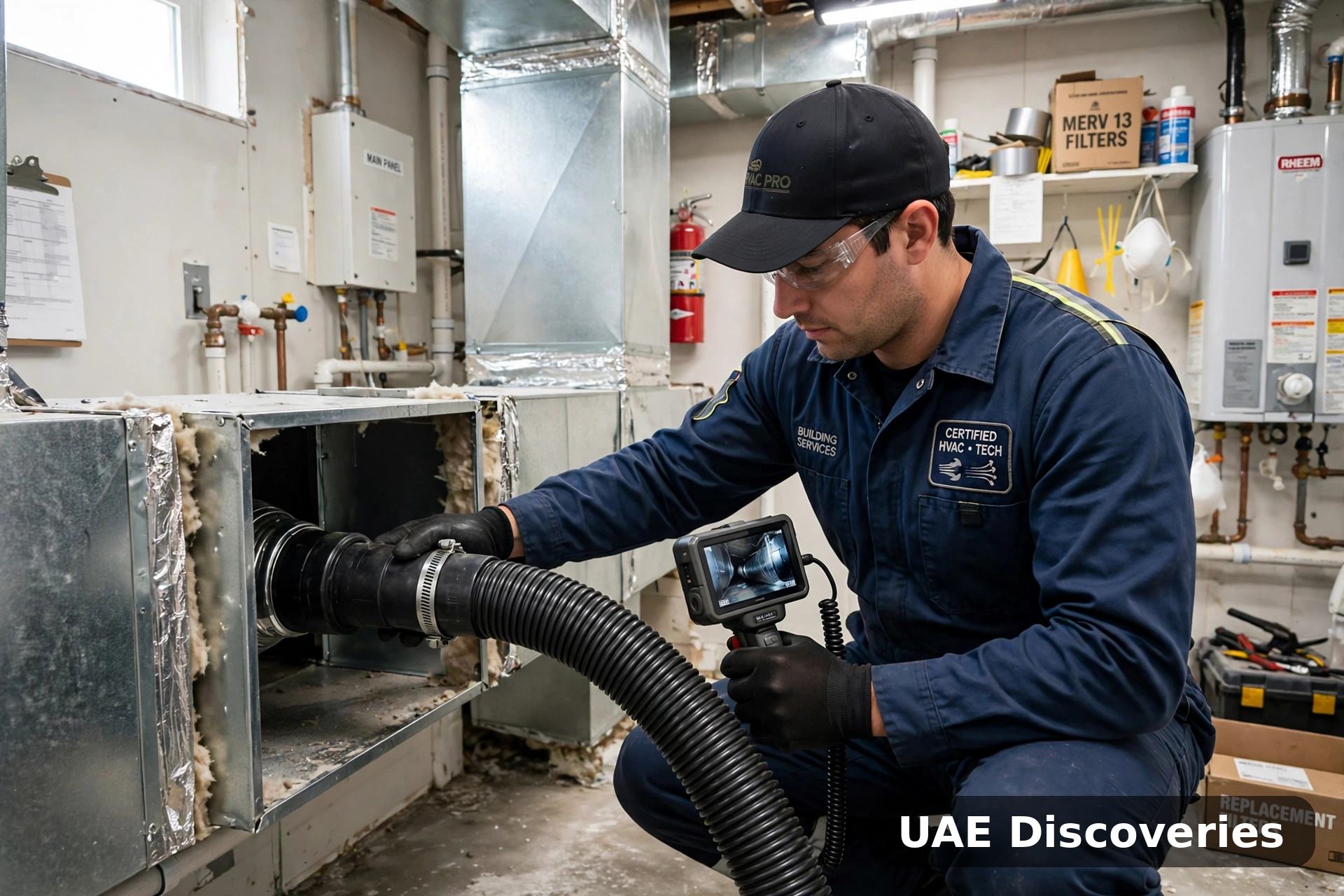
A proper job starts with inspection. The technician checks the ducts, registers and air handler, often with a camera, and agrees the scope of work before any cleaning begins.
The core method is called source removal. A powerful vacuum puts the ductwork under negative pressure while brushes, air whips or compressed-air tools loosen debris, so everything dislodged is drawn out rather than blown into rooms. A service cleans every component the air passes over: supply and return ducts, registers, grilles, the blower, coils and the air handler housing.
This is also why the deep work belongs to professionals rather than a household vacuum. Domestic equipment cannot maintain negative pressure or reach far runs, and forcing a brush through flexible duct can tear its lining. NADCA’s standards for duct cleaning explains what a compliant job should include.
How Often Should You Schedule This Service?
There is no fixed interval that suits every home, whatever a coupon leaflet claims. A more reliable approach is to have the system inspected every few years and clean only when the inspection shows significant buildup or contamination.
Some households reasonably choose shorter cycles. Homes with shedding pets, smokers, recent building work, or a family member with respiratory sensitivities accumulate debris faster and have more at stake in air quality.
Moving into a new home is another sensible trigger. An early inspection establishes the ductwork’s actual condition, instead of inheriting an unknown maintenance history and wondering about every musty smell.
How Much Does Air Duct Cleaning Cost?
Prices vary widely by region, home size, number of vents and how contaminated the system is. As a broad guide, a thorough professional cleaning of a typical home commonly falls somewhere in the region of a few hundred dollars.
The US EPA has cited figures of roughly $450 to $1,000 per heating and cooling system for a proper, complete job. Quotes far below that range usually cover only part of the system, or rely on add-ons sold once the crew is inside.
Deep-discount offers deserve particular caution. Consumer-protection guidance has long warned about bait pricing on duct cleaning, where a very low headline price becomes a much larger bill through extras. A written scope, agreed in advance, protects you.
Frequently Asked Questions
Is air duct cleaning a scam?
No, but it is oversold. It is a legitimate service with clear uses, mainly heavy buildup, mould or infestation. The problem is routine selling to homes whose ducts show nothing more than normal light dust.
Can I clean my air ducts myself?
You can vacuum registers and change filters, which genuinely helps. Full duct cleaning needs negative-pressure equipment and agitation tools that reach entire runs, so the deep work is a professional job.
How long does a professional cleaning take?
Most homes take roughly two to four hours, depending on system size, access and contamination levels. Very large or heavily contaminated systems can take most of a day.
Will duct cleaning fix my allergies?
It can reduce one source of airborne dust and dander, and some households notice a difference. It is not a medical treatment, and persistent symptoms deserve a doctor’s input as well as cleaner ducts.
Does duct cleaning include the furnace and coils?
A complete service should, because cleaning ducts while leaving a dirty blower and coils makes little sense. Confirm the component list in writing before agreeing the price.
Take the Next Step Toward Cleaner Air
Your ductwork runs quietly in the background, and most of the time it deserves to stay there. The homes that benefit from cleaning are the ones showing real signs: visible mould, debris blowing from vents, or dust that returns faster than it should.
If that sounds like your home, book an inspection first and let the evidence decide. Paired with routine HVAC maintenance, an occasional evidence-based cleaning keeps the whole system breathing easily.