

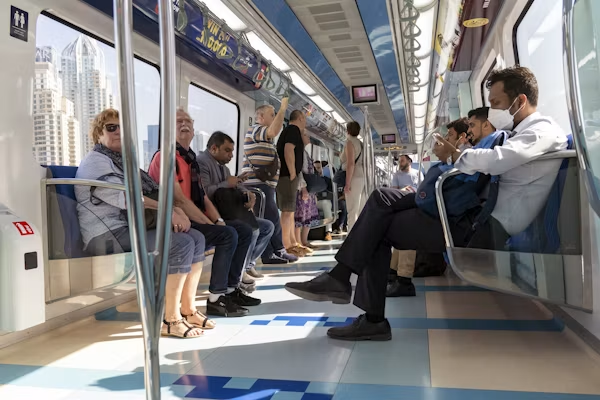
Over two million people ride the Dubai Metro on an average day, making it the backbone of daily commuting across the emirate. If you live in Dubai and still rely on your car for every trip, you are probably paying more in fuel and parking than you realize.
This guide covers everything a resident actually needs from the Dubai Metro: how the zone based fare system works, which Nol Card fits your commute, station by station route info for the Red and Green Lines, and the small details that save you time every single day.
In this guide you will learn:
- How Dubai Metro zones and fares actually work
- Which Nol Card is right for a daily commuter versus an occasional rider
- Full breakdown of the Red Line and Green Line routes
- Operating hours, including Friday and holiday changes
- How to get from the metro to Dubai Mall, Marina, and the airport
- Common mistakes residents make that cost them money or time
Let’s get into the details.
Table of Contents
- What Is Dubai Metro
- Why Dubai Metro Matters for Residents in 2026
- How Dubai Metro Fares and Zones Work
- Dubai Metro Lines and Stations
- Choosing the Right Nol Card
- Dubai Metro Operating Hours
- Common Dubai Metro Mistakes to Avoid
- Real World Example: A Resident’s Daily Commute
- FAQ
What Is Dubai Metro
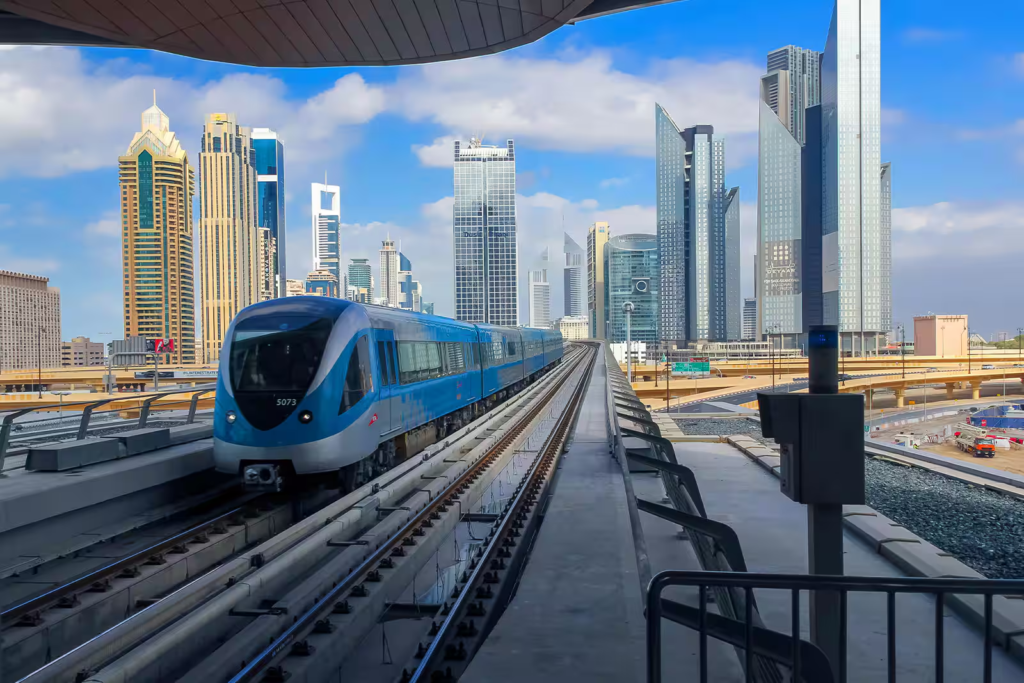
Dubai Metro is defined as an automated, driverless rapid transit rail system operated by Dubai’s Roads and Transport Authority (RTA), connecting major residential, business, and tourist areas across the city. It opened in 2009 and has since become one of the widest reaching driverless metro networks in the world.
The network runs on two main lines, the Red Line and the Green Line, covering roughly 89 kilometers and 55 stations combined. A third line, referred to as the Blue Line, is currently in development and is expected to add about 14 more stations, including three interchange points, with operations targeted to begin around 2029.
Pro Tip: If you are new to Dubai, download the RTA Dubai app before your first ride. It shows live train timings, station maps, and lets you check your Nol Card balance without standing at a machine.
Who Runs Dubai Metro
The Roads and Transport Authority manages Dubai Metro along with the tram, bus network, and water bus services. All of these run on the same Nol Card system, which matters when you are deciding which card to buy.
Why It Is Called Driverless
Dubai Metro trains operate without a human driver in the cabin. Sensors and automated control systems handle acceleration, braking, and door operation, which is part of why the system maintains such consistent frequency during peak hours.
Why Dubai Metro Matters for Residents in 2026
Dubai Metro matters more in 2026 than it did a few years ago because fuel costs, parking fees, and Salik toll charges have all made daily driving noticeably more expensive. For residents commuting between areas like Dubai Marina, Business Bay, and Deira, the metro is often faster during rush hour than a car stuck in traffic on Sheikh Zayed Road.
Quotable insight: A resident who switches even three car commutes a week to Dubai Metro can cut their monthly transport cost by more than half once fuel, parking, and Salik are factored in.
Cost Comparison for Residents
Driving involves fuel, parking, and toll gates. Dubai Metro involves a flat, predictable zone based fare. For a resident doing a daily round trip within two zones, metro fares typically land under AED 15 per day, well below the combined cost of fuel and parking in areas like Downtown or DIFC.
Traffic Avoidance
Dubai Metro runs on an elevated and underground track fully separated from road traffic. This means your commute time stays consistent regardless of accidents, road closures, or rush hour congestion on the surface roads below.
How Dubai Metro Fares and Zones Work
Dubai Metro fares are calculated using a zone based system. Dubai’s transport network is divided into seven zones, and the price of a journey depends on how many zones a rider enters or crosses.
Here is the direct answer: the fewer zones you cross, the cheaper your trip. A ride within a single zone costs the least, while a journey crossing three or more zones costs the most.
Step by Step: How a Fare Is Calculated
- Tap in at your starting station using a Nol Card with sufficient balance.
- Travel through however many zones your route covers.
- Tap out at your destination station, and the system deducts the fare automatically.
- Check your balance through the RTA app if you are unsure how many trips remain.
With a Nol Silver Card, a single ride costs 3 AED for one zone, 5 AED for two zones, or 7.50 AED for more than two zones, and Gold Class costs double. A minimum balance of 7.50 AED is required just to tap in at the gate.
Zone Layout for Residents
Zone 6 covers the central business and tourism district, including Burj Khalifa and Dubai Mall station, Business Bay, Financial Centre, and Emirates Towers, which is why most residents commuting into central Dubai will cross at least one or two zone boundaries.
Zone 2 includes western neighborhoods along the Red Line such as Ibn Battuta, Discovery Gardens, Al Furjan, and Jumeirah Lakes Towers, a common residential cluster for expats.
Daily Fare Cap: Silver and Blue Nol cards are capped at AED 14 per day, and once you hit that cap, further rides are free until midnight. This matters if you make multiple trips in one day.
Dubai Metro Lines and Stations
Dubai Metro currently operates two lines that residents rely on for nearly every part of the city.
Red Line
The Red Line runs parallel to Sheikh Zayed Road and covers the corridor most residents associate with Dubai’s business and tourism core, from Rashidiya through Dubai Marina and out toward Expo City and the airport.
Green Line
The Green Line loops through older, more established residential districts including Deira, Bur Dubai, and Al Karama, intersecting the Red Line at Union and Burjuman stations.
Interchange Stations
Union Station and Burjuman Station connect the Red and Green Lines. If your commute involves both lines, plan your route through one of these two stations to avoid backtracking.
Dubai Metro Map →
Dubai Metro Red Line →
Dubai Metro Green Line →
Choosing the Right Nol Card
Dubai Metro Comparison: Nol Card Types at a Glance
| Card Type | Key Feature | Best For | Price | Rating |
|---|---|---|---|---|
| Silver Nol Card | Standard class, works on metro, bus, tram, water bus and RTA parking | Residents and short stay visitors | AED 25 total, includes AED 19 credit | 4.7/5 |
| Gold Nol Card | Gold class access on metro and tram | Commuters who want extra space | AED 25 total, fares charged at double rate | 4.3/5 |
| Blue Nol Card | Registered card, eligible for student and senior discounts | Students, seniors, People of Determination | AED 70 total, includes AED 20 credit | 4.6/5 |
| Red Ticket | Disposable ticket, up to 10 trips, single transport mode only | One off riders, tourists | AED 2 per card | 3.9/5 |
Winner for most residents: The Silver Nol Card. It works across metro, bus, tram, and water bus, which matters if your commute involves more than one mode of transport, and it carries no extra registration requirement.
Pro Tip: Register your Nol Card online through the RTA website. If it is lost or stolen, a registered card protects your remaining balance, while an unregistered card’s balance is gone for good.
Dubai Metro Nol Card →
Dubai Metro Fares →
Dubai Metro Operating Hours
Dubai Metro operating hours change depending on the day of the week, which trips up even long time residents.
Monday through Thursday and Saturday, trains run from 5 AM to midnight. On Friday, service extends to 1 AM. On Sunday, the metro opens later, running from 8 AM to midnight. Hours may shift during public holidays, so it is worth confirming with RTA directly if you are traveling early on a holiday morning.
Sunday Schedule Catches People Out
Because Sunday is a working day in the UAE, residents sometimes assume normal weekday hours apply. Plan an alternative for anything before 8 AM on a Sunday.
Common Dubai Metro Mistakes to Avoid
Dubai Metro is simple once you know the system, but new residents repeat the same handful of mistakes.
- Forgetting to tap out: If you forget, the system charges you the maximum fare for your card type.
- Letting your balance drop below AED 7.50: This is the minimum balance required to tap in at any station, and falling below it blocks entry.
- Buying a Red Ticket for daily commuting: It costs more per trip than a Silver Card and only works on one transport mode.
- Ignoring the Gold Class car by accident: Tapping into the wrong carriage with a Silver Card results in a fine, not just an upgrade charge.
- Assuming Sunday hours match weekdays: As covered above, Sunday service starts later.
Real World Example: A Resident’s Daily Commute
Sara, a resident in Discovery Gardens working in Business Bay, switched from driving to Dubai Metro at the start of 2026. Her route crosses from Zone 2 into Zone 6, a three zone journey each way.
Using a Silver Nol Card, her round trip costs roughly AED 15 per day, capped by the AED 14 daily limit plus a small margin for connecting bus travel to the station. Over a working month, that lands near AED 300, compared to the AED 900 to 1,200 she was previously spending on fuel, parking, and Salik combined. Her commute time also became more predictable, since the metro is unaffected by Sheikh Zayed Road traffic.
This kind of switch is what we call the Metro Savings Framework: compare your current fuel plus parking plus toll cost against a capped daily metro fare, then multiply by your actual commuting days per month rather than assuming every day is a workday.
FAQ
What is Dubai Metro?
Dubai Metro is an automated, driverless rail transit system operated by the RTA, running across two main lines and 55 stations throughout Dubai. It connects major residential districts, business hubs, and tourist landmarks without relying on a human driver in the cabin.
How does Dubai Metro fare pricing work?
Dubai Metro uses a zone based fare system. The cost of your trip depends on how many of the seven fare zones you travel through, with a Silver Nol Card charging between AED 3 and AED 7.50 per single journey depending on distance.
Why is Dubai Metro cheaper than driving for residents?
Dubai Metro is cheaper for most residents because it avoids fuel costs, parking fees, and Salik toll charges entirely. A daily fare cap of AED 14 on Silver and Blue cards means frequent riders pay a predictable, capped amount rather than variable driving costs.
Is Dubai Metro worth it for daily commuting?
Yes, Dubai Metro is worth it for most daily commuters, especially those traveling along the Red Line corridor near Sheikh Zayed Road. It avoids traffic entirely and typically costs less per month than driving once parking and fuel are included.
What is the best Nol Card for a resident who commutes daily?
The Silver Nol Card is the best option for most residents because it works across metro, bus, tram, and water bus, and it can be registered online to protect your balance if the card is lost.
How much does Dubai Metro cost per month for a regular commuter?
A regular commuter crossing two to three zones daily typically pays between AED 250 and AED 350 per month on a Silver Nol Card, largely due to the AED 14 daily fare cap that limits maximum spending per day.
What is the difference between Dubai Metro Silver and Gold Nol Cards?
The Silver Nol Card gives standard class seating at regular fares, while the Gold Nol Card grants access to the Gold Class cabin at double the fare. Both cards work across the same network of stations and lines.
Can Dubai Metro help me avoid Dubai traffic during rush hour?
Yes, Dubai Metro runs on a track fully separated from road traffic, so your commute time stays consistent even during peak hour congestion on Sheikh Zayed Road or other major routes.
What time does Dubai Metro open on Sunday?
Dubai Metro opens later on Sunday than on other weekdays, starting service at 8 AM and running until midnight, compared to a 5 AM start on Monday through Thursday and Saturday.
Conclusion
Dubai Metro remains the most cost effective and predictable way for residents to get around the city, particularly for anyone commuting along the Red Line corridor. Understanding the zone based fare system, picking the right Nol Card, and knowing the Sunday schedule difference will save you both money and frustration every week.
Next Steps:
- Get or register a Silver Nol Card if you do not already have one
- Map your regular commute against the zone chart to estimate your monthly cost
- Download the RTA app to track live timings and your card balance
