

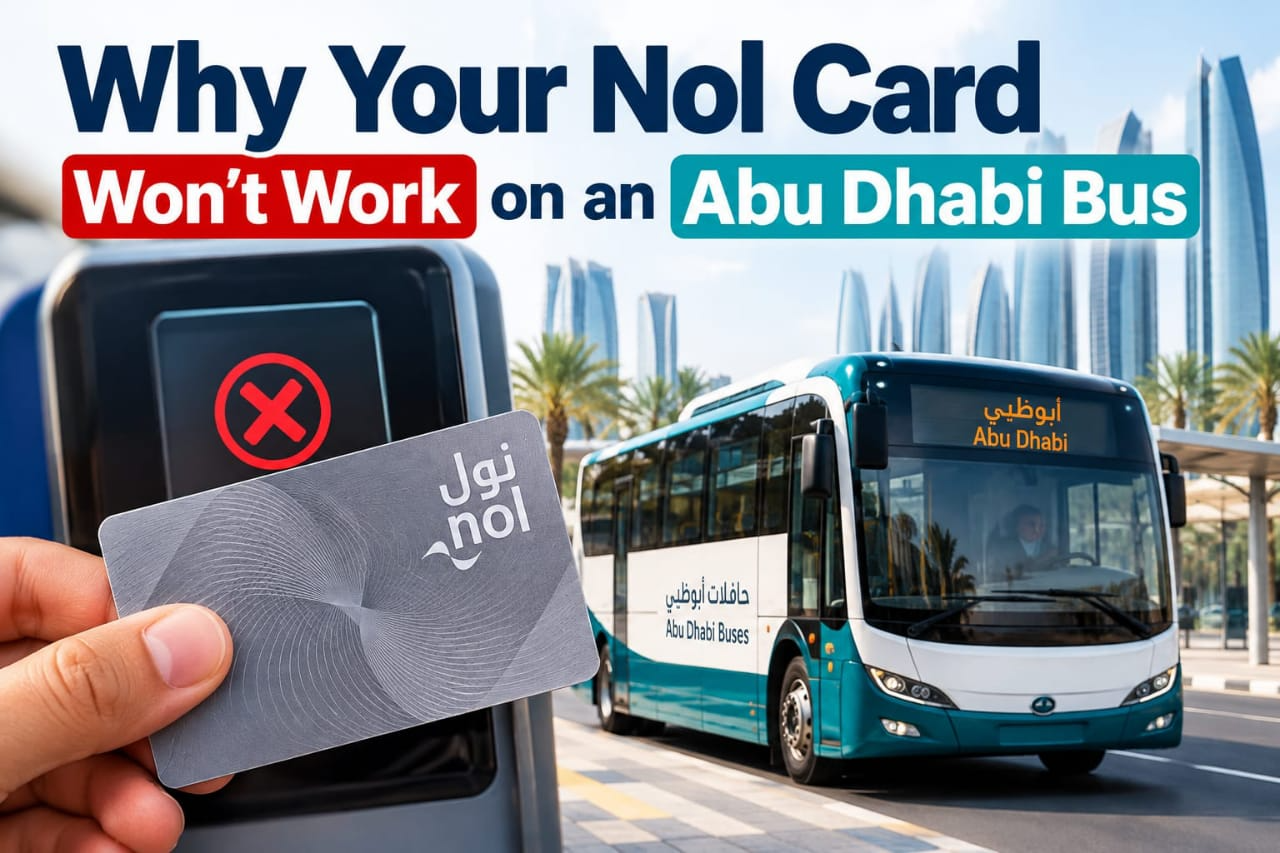
A surprising number of UAE residents find this out the hard way — usually standing at a bus door in Mussafah, tapping a card that works fine back home in Dubai, watching it get rejected. Abu Dhabi runs its own transport network entirely separate from Dubai’s, and the two payment systems, Hafilat and Nol, simply don’t talk to each other. Anyone who’s lived exclusively in one emirate rarely has a reason to learn this — right up until a work trip or a weekend visit puts them on the wrong side of the border with the wrong card in hand.
Two Networks, Two Cards
Each emirate manages its own transport authority, and the card systems follow that same division. Abu Dhabi’s Department of Transport runs Hafilat. Dubai’s RTA runs Nol, and Sharjah and the Northern Emirates fall under that same network. A card loaded with balance in one city carries no weight in the other — not a technical glitch, just two genuinely separate systems that happen to share a border.
For anyone commuting between Abu Dhabi and Dubai regularly, that means two cards in the wallet, not one, topped up on two different schedules, through two different apps, at two different sets of kiosks.
What a Nol Card Actually Is
Nol comes in four tiers, and picking the wrong one is its own common mistake. The Silver card is the standard option most residents carry — rechargeable, reusable, and valid across Metro, bus, tram, and water bus. Gold works identically but unlocks the Gold Class carriages on the Metro, a genuinely different, less crowded experience during peak hours for a modest fare premium. Blue is the registered, photo-linked version, replaceable if lost since the balance is tied to an account rather than the physical card itself. Red is the disposable option — a paper ticket for a single journey or a short day-pass window, meant for tourists or a one-off trip rather than daily use.
Nol cards are sold and topped up at Metro station vending machines, staffed ticket offices, and a growing number of retail counters across Dubai — broadly the same kind of network Hafilat runs in Abu Dhabi, just under a different name and a different app.
Getting a Hafilat Card Sorted
Self-service kiosks at major bus stations handle both purchase and top-up, and boarding is cashless across the board — no paying the driver directly. The process at a kiosk runs the same way each time:
- Select the card option on the kiosk’s main screen
- Pay the AED 5 issuance fee, plus whatever starting balance is wanted
- Collect the card, already active and ready to tap
- Top up later at any kiosk, through the Darbi app, or via the ITC portal
Fares scale by distance, not a flat rate: AED 2 covers a short hop across town, while a longer run like Abu Dhabi to Dubai costs considerably more, reflecting the distance covered. Running out of balance mid-route isn’t usually a hard stop either — most readers allow a small negative balance to clear the current tap, with the shortfall deducted automatically on the next top-up, though this shouldn’t be relied on as a habit.
UAEwow’s full Hafilat guide breaks down current fares in more detail, along with what to do when a balance shows up wrong or a top-up doesn’t register.
Crossing Emirates by Bus
The card systems stop at emirate borders. The buses don’t. Regular services run between Ajman, Dubai, Sharjah and further out, each on its own timetable, independent of whichever card gets used at either end. These intercity routes generally still run on Nol or Hafilat depending on which authority operates that specific line, rather than requiring a separate ticket altogether — though it’s worth confirming per route, since the rule isn’t identical everywhere.
Google Maps estimates for these routes tend to drift from the real published schedule, sometimes by twenty minutes or more once actual traffic patterns are accounted for — worth checking directly if the commute is a regular one rather than trusting an app’s generic estimate. UAEwow’s Ajman to Dubai timing page pulls straight from the official schedule, updated as routes change.
Packing for a Week Across Two Emirates
A visitor splitting a week between Abu Dhabi and Dubai needs both cards from day one, not one universal pass picked up on arrival. Even longtime residents get caught out by this if their daily routine rarely crosses emirate lines — the assumption that one card, one country is a reasonable one right up until it isn’t.
The practical fix is small: buy both cards early, even before they’re needed. A Nol Silver picked up at any Dubai Metro station and a Hafilat card from an Abu Dhabi kiosk together cost under AED 15 to issue, and having both already in a wallet removes the one moment of friction that actually derails a first-time UAE commute — standing at a reader, watching it flash red, with a bus full of people waiting behind.
