
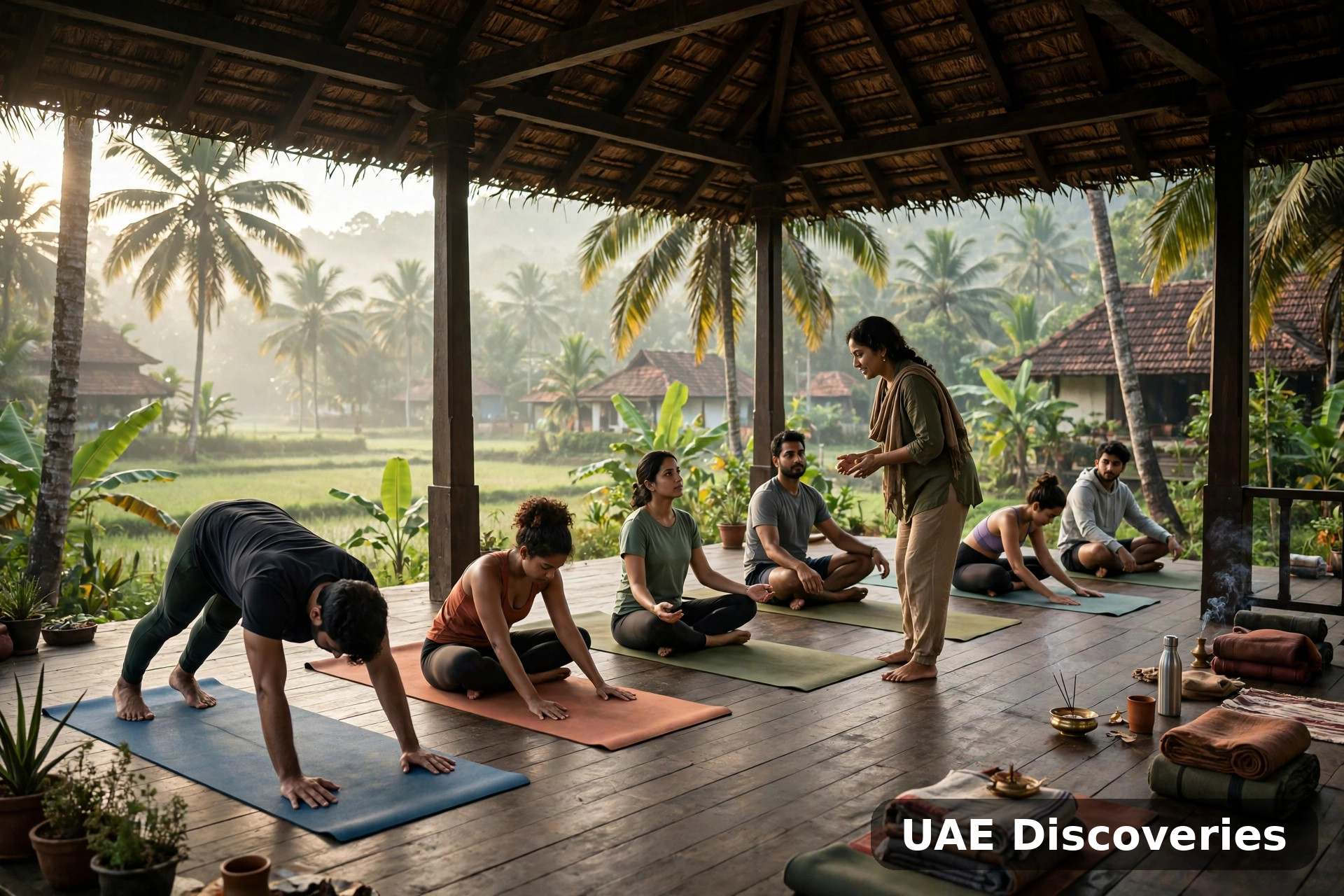
A yoga teacher training in kerala places you in the one Indian state where yoga and Ayurveda have grown side by side for centuries, and where residential study is a way of life rather than a weekend format.
Each year, students travel from every continent to live at an ashram or school for a month, practise at dawn, study philosophy in the afternoons and leave with a teaching certificate.
This guide explains how the courses work, from the 200-hour foundation to advanced study, what they typically cost, and how to choose a school that genuinely fits you.
Why Kerala Draws Yoga Students From Around the World
Kerala, on India’s tropical southwest coast, is widely known as the home of Ayurveda, Kerala’s traditional healing system, the traditional system of medicine that developed there over thousands of years. Many yoga schools weave basic Ayurvedic principles into daily routine and food.
The state also has deep yoga roots of its own. The Sivananda tradition, one of the most widely taught classical systems, runs a long-established ashram at Neyyar Dam near Thiruvananthapuram, drawing students since the late 1970s.
Add backwaters, palm groves, hill stations and a gentler pace than India’s big cities, and Kerala offers the quiet, contained setting that intensive residential training needs.
Types of Yoga Teacher Training in Kerala: 200, 300 and 500 Hours
Courses follow the international ladder used almost everywhere. The 200-hour training is the foundation level, designed to take a committed student to a registered beginner teacher.
The 300-hour course is advanced study for teachers who already hold a 200-hour certificate. Completing both, at registered schools, adds up to the 500-hour level, the highest standard tier.
Shorter options exist too: 100-hour modules, yin or prenatal specialisations, and retreats that carry no teaching qualification. They suit deepening practice, provided you know they are not full teaching certificates.
Yoga Styles You Will Study
Classical Hatha is the backbone of most Kerala trainings, taught as a balanced sequence of postures, breathing and relaxation. The Sivananda style, with its fixed twelve-posture sequence, is especially well represented in the state.
Many schools add Ashtanga Vinyasa, the demanding set-series practice from Mysore, and flowing Vinyasa classes. Some programmes include yin yoga, yoga nidra and meditation as distinct study blocks.
Because of the Ayurvedic setting, some curricula also introduce Ayurvedic daily routine, diet principles and basic anatomy through an Ayurvedic lens. Check the syllabus if that combination is what you are travelling for.
What the Curriculum Covers
A standard 200-hour syllabus divides into five broad areas: techniques and practice, teaching methodology, anatomy and physiology, yoga philosophy and ethics, and supervised teaching practice.
- Daily practice of asana, pranayama, kriyas and meditation
- Alignment, adjustments and safe sequencing
- Anatomy and physiology applied to yoga practice
- Philosophy, including the Yoga Sutras, the Bhagavad Gita and the Hatha Yoga Pradipika
- Teaching practicum, with feedback from lead trainers
The philosophy element surprises students who expect pure exercise. Expect chanting, Sanskrit terms, and discussion of the eight limbs of yoga alongside the physical training.
A Typical Day on a Yoga Teacher Training in Kerala
Residential courses run on an ashram-style rhythm. The day usually begins around 5:30 with meditation or chanting, followed by a two-hour morning asana practice before breakfast.
Late morning and afternoon bring lectures, anatomy, philosophy and teaching practice, with a second physical practice before dinner. Meals are vegetarian, lights-out is early, and one day a week is usually free.
It is demanding by design. Most students find the second week easier than the first, as sleep, food and practice settle into a single steady routine.
How Long Does Training Take and When to Go
A residential 200-hour course usually runs three to four weeks of full-time study. A 300-hour course typically takes four to five weeks, and combined 500-hour programmes run longer still.
Kerala’s main season runs from October to February, when the weather is driest and coolest. This is when most schools schedule their full intakes, and places fill earliest; the best time to visit Kerala gives the full seasonal picture.
The monsoon arrives from June to September, bringing heavy rain and humidity. Courses still run, prices often drop, and Ayurvedic tradition actually favours the rainy season for treatments, but travel is slower.
Yoga Alliance Certification Explained
Yoga Alliance is the largest international registry of yoga schools and teachers. A school registered with it is called an RYS, and graduates of its 200-hour course can register as RYT-200 teachers.
Registration is not a legal licence, and no country requires it to teach. Studios and insurers in many countries still ask for it, which is why most international students choose a registered school.
Before booking, verify the school’s registration and syllabus in the Yoga Alliance school directory. Registration status changes, and a logo on a website is not proof.
How Much Does Yoga Teacher Training in Kerala Cost?
Kerala is among the more affordable places in the world to train. Residential 200-hour courses are commonly advertised in a broad range around US$1,000 to $2,500, usually including tuition, shared accommodation and meals, though fees vary widely by school and season.
Ashram-run programmes often sit at the lower end, while beachfront schools with private rooms price higher. The 300-hour level generally costs more again, and prices everywhere rise in peak season.
Always confirm what a fee excludes. Flights, visas, airport transfers, books and personal spending sit outside the course price, and a cheap headline fee with many exclusions can cost more overall.
How to Choose the Right School
Start with the teaching, not the photographs. Look for lead trainers with long teaching records, small enough class sizes for individual correction, and a syllabus published in full before you pay a deposit.
Then check the practicalities: the exact location, room type, food, and what past students say across independent review platforms. A school that answers detailed questions patiently is usually a good sign.
Finally, match the school to your intention. A strict ashram suits students seeking discipline and philosophy; a beach school with a lighter schedule suits those combining training with travel.
Food, Stay and Daily Life During Training
Most residential courses house students on site, in simple single or shared rooms. The routine is part of the training: fixed wake-up times, communal meals and quiet hours after dinner.
Food is vegetarian and usually sattvic in style, meaning fresh, lightly spiced meals without onion, garlic or stimulants in stricter ashrams. Tea and coffee may be limited, which regular drinkers feel in week one.
Days off are for the surrounding area: backwater trips, local temples, Ayurvedic massages or simply sleep. Kerala rewards slow exploration, and the training schedule deliberately leaves room for it.
What to Do After You Qualify
Most new teachers start small: cover classes at local studios, teach community or workplace sessions, and assist experienced teachers. The first year is about hours in front of real students, not perfect sequences.
Registering with Yoga Alliance, arranging teaching insurance and setting up simple class administration come next. Many graduates also keep studying, adding a 300-hour course or a specialisation within a few years.
Teaching abroad is possible but visa rules vary sharply by country. Treat any school promising guaranteed overseas work with caution; a certificate opens doors, it does not carry you through them.
Frequently Asked Questions
Do I need to be an advanced practitioner to join a 200-hour course?
No. Schools generally ask for a regular practice of at least six months to a year, and genuine interest matters more than difficult postures. Very flexible students are not automatically the best teachers.
Is a Kerala certificate valid for teaching in my country?
In most countries yoga teaching is unregulated, so a Yoga Alliance-registered certificate is widely accepted by studios and insurers. Check local insurance and venue requirements before relying on it.
Can I do the training if I do not want to teach?
Yes, many students train purely to deepen their own practice. Schools are used to this, although the teaching-practice elements remain compulsory parts of the course.
What should I pack for a Kerala training?
Light, modest clothing for practice and temple visits, a shawl for cool mornings, personal toiletries and any regular medication. Schools usually provide mats and props, but confirm before travelling.
Conclusion
A yoga teacher training in Kerala offers something few destinations match: classical teaching, Ayurvedic surroundings and a daily rhythm built entirely around practice. Choose the level honestly, verify the school’s registration, and go in the season that suits you.
Do that, and the month you spend there is likely to shape your practice, and possibly your work, for years afterwards.